technology
Dentistry’s New Front Line Is Content, Not the Operatory
From school screenings in Rawalpindi to low-quality antibiotic videos, the industry is learning that trust is now manufactured—and can fail—long before chairside care begins.
By Dr. Sarah Chen ·
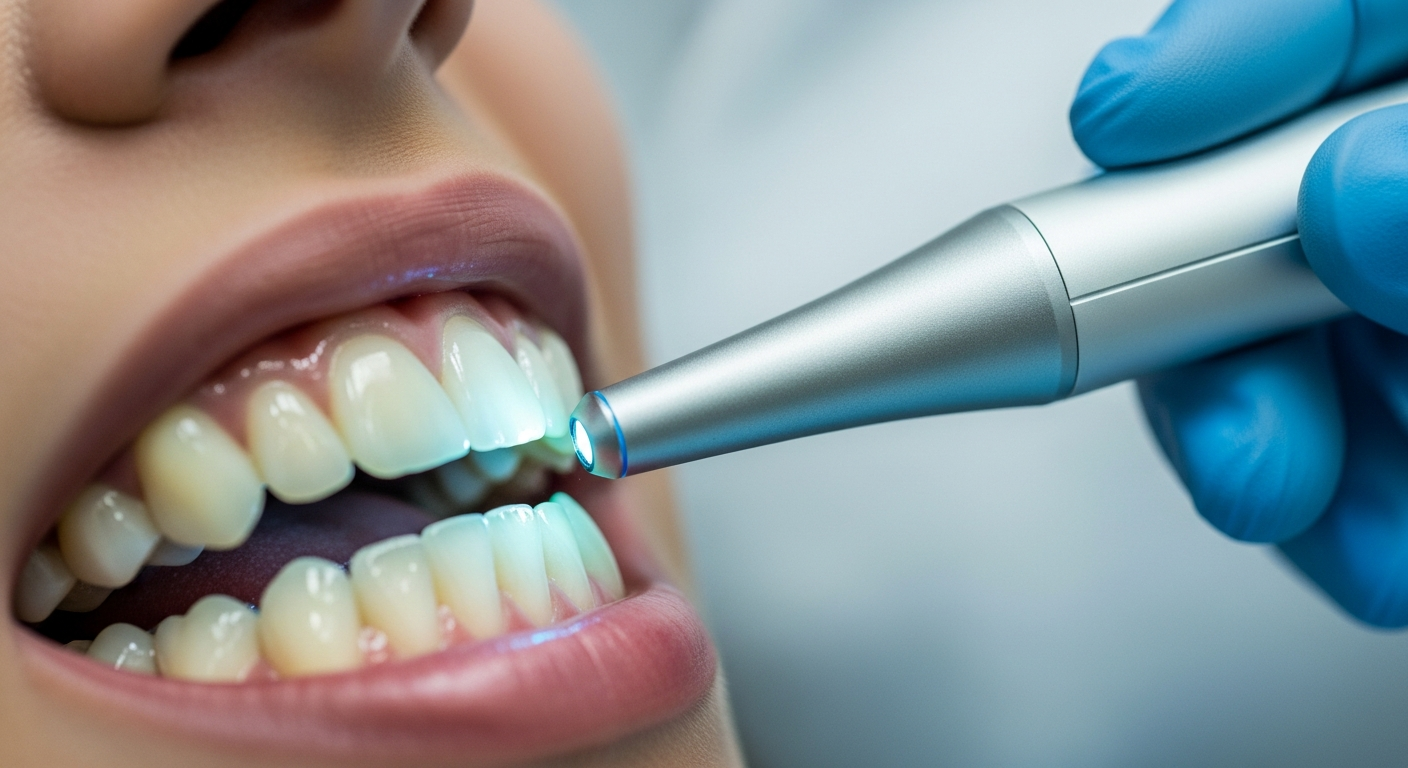
A dental exam used to begin with a mirror and an explorer. Increasingly, it begins with a search bar, a YouTube thumbnail, or a brand campaign built by a digital marketing lead. That sounds like a marketing cliché until you look at what’s actually happening across the sector: public programmes screening children, universities investing in new facilities, the NHS opening urgent-care capacity, AI vendors promising “practice intelligence”, and regulators—and courts—drawing hard lines around how knowledge is acquired and verified. The non-obvious throughline is that dentistry is entering a credibility crunch: the limiting factor is no longer simply whether patients can reach a chair, but whether the information and decisions that steer them to that chair are clinically trustworthy. And that credibility is now being produced—sometimes responsibly, often not—outside traditional clinical and academic guardrails.
Consider the Rawalpindi outreach by Watim Dental College, which screened 350 schoolchildren. The headline reads like classic public health—early detection, prevention, referral pathways. But in 2026 terms, it’s also a data-capture exercise and a trust-building campaign, whether intentionally designed that way or not. Screening 350 children is modest in epidemiological scale, yet strategically large in narrative impact: a teaching institution demonstrates community legitimacy, families are introduced to the idea of routine examinations, and the college becomes a first point of contact in a system where dental disease is often normalised until pain forces action. This is the kind of “trust at the edge” that public health specialists have always valued, but it is now competing with a much louder trust-engine: consumer media. When patients’ first exposure to dental advice is a video about antibiotics with low educational quality, the clinical system inherits the downstream consequences—misconceptions, inappropriate expectations, and sometimes direct harm.
The study flagged by Bioengineer.org—that YouTube videos on dental antibiotic use show low educational quality—should worry every clinician who has tried to de-escalate a request for “just antibiotics” in an emergency slot. Antibiotic stewardship is one of the few areas in dentistry where the consequences of misinformation travel fast: inappropriate prescribing contributes to resistance, adverse drug reactions, and delayed definitive care. In practice, stewardship failures are rarely about clinicians not knowing guidelines; they are about clinicians under pressure from time, patient expectations, and access constraints. If the dominant patient-facing content normalises antibiotics as a shortcut to treatment, it effectively taxes every chairside conversation with additional friction. That friction is not evenly distributed: it hits urgent-care settings hardest, including the newly opened NHS urgent dental practice in Cornwall. A system can add capacity—more sessions, more chairs, a new facility—but if demand arrives pre-loaded with bad information, each appointment becomes less productive and more conflict-prone. Access is not just a number of openings; it is the efficiency with which those openings translate into definitive care.
This is why the unglamorous “topic ladder” described by Dentainment matters more than many clinicians might like to admit. Most dental marketing content fails not because it lacks keywords, but because it lacks clinical sequence: it does not meet patients at the point of objection and move them, stepwise, toward informed consent. The claim is operational, not theoretical: a 90-day cadence, internal linking rules, and conversion benchmarks that “reliably produce calls and booked exams.” The industry reflex is to dismiss this as lead generation. The clinical reality is that structured education—if done with evidence-based framing—can be a form of triage. A practice that publishes clear, guideline-aligned explanations of when antibiotics are indicated, what “urgent” actually means, and why definitive treatment is preferable can reduce inappropriate demand and improve appointment yield. Conversely, a practice that outsources content to generic agencies risks amplifying the same misinformation ecosystem that the YouTube study indicts. The uncomfortable tension is that the tools of persuasion are now inseparable from the tools of care: the pre-appointment information environment shapes clinical workload, prescribing risk, and patient satisfaction scores.
Into that environment steps Pearl, launching its Practice Intelligence dental AI in Canada. Dentistry has been here before—computer-aided detection, radiographic triage, automated charting prompts—but the pitch has matured. “Practice intelligence” implies not only identifying radiographic findings but optimising decisions: treatment planning, recall intervals, coding patterns, and perhaps patient communication triggers. For industry insiders, the question is less whether AI can find pathology and more whether it can maintain credibility at scale. An algorithm that flags incipient lesions on bitewings can raise diagnostic sensitivity, but it can also inflate treatment if not calibrated, audited, and integrated with clinical judgement. The Canadian launch matters because it will collide with two realities: first, payer and regulator scrutiny of overtreatment is intensifying; second, patients are becoming simultaneously more sceptical and more persuadable. In a world where a Chilean appeals court upholds a university expulsion after a dentistry student used ChatGPT during a supervised exam, institutions are signalling that provenance of knowledge is becoming enforceable, not just ethical. The court case is about exam integrity on its face; underneath, it is about society drawing boundaries around machine-assisted cognition. That boundary will not stop at universities. It will reach into clinical documentation, patient education content, and AI-assisted treatment planning—especially when adverse outcomes require attribution.
The industry’s response so far is fragmented. Universities such as Queen Mary University of London highlight “dentistry facilities”—the physical infrastructure of training and care—as if bricks, simulators and clinics can by themselves guarantee competence in a digital world. Meanwhile Liverpool researchers are developing a game on dental care barriers, an intervention that implicitly recognises the behavioural economics of access: stigma, cost anxiety, fear, and practical constraints are often the real reasons patients defer care. A well-designed serious game can surface those barriers in a way leaflets never will; but the medium also raises the stakes on evidence. If we are going to “gamify” dental health barriers, we must be able to demonstrate—preferably in peer-reviewed outcomes—that engagement leads to measurable improvements: higher attendance rates, reduced caries incidence, better periodontal maintenance, fewer antibiotic-only visits. Without that, we risk building yet another layer of content that feels helpful but cannot be trusted as an intervention.
Corporate dentistry and consumer health brands have already understood where this is heading. Haleon’s appointment of Surabhi Talwar as Digital Marketing Lead for Oral Health Care is not a personnel footnote; it is a strategic statement about where value will be created. For a consumer oral health business, growth increasingly comes from shaping habits and beliefs at population scale—what people think about bleeding gums, sensitivity, whitening safety, fluoride, and yes, when antibiotics are appropriate. The traditional separation—clinicians handle evidence, marketers handle reach—is collapsing. Reach without evidence creates backlash and harms; evidence without reach fails to move outcomes. The winners will be those who can weld them together: build content systems that are clinically defensible, behaviourally savvy, and operationally linked to access points, whether those are NHS urgent clinics, university outreach programmes, or private practice booking funnels.
What does that mean for industry insiders—practice owners, DSOs, dental schools, AI vendors, and policymakers? First, treat patient-facing information as regulated clinical infrastructure. If your content—blog posts, videos, chat scripts—drives antibiotic expectations, sedation requests, or urgency framing, it is functionally part of the care pathway and should be governed like one. That implies named clinical editors, citation standards, and periodic audits against current guidance, not “evergreen” copy. Second, build feedback loops. Outreach programmes like Watim’s screening should not stop at counting children screened; they should measure referral completion, treatment uptake, and oral health outcomes at six and 12 months. NHS urgent-care expansions should track not just attendance but conversion to definitive care, repeat attenders, and antibiotic prescribing rates. AI deployments should be evaluated not only on detection metrics but on net clinical value: changes in treatment acceptance, re-treatment rates, and patient complaints. Third, set clear institutional boundaries for generative AI. The Chile case shows enforcement is possible; dentistry needs policies that distinguish assistive drafting from deceptive substitution, and that protect both academic standards and clinical accountability.
The strategic point is simple and uncomfortable: dentistry’s next decade will not be decided solely by who has the best scanners, the most chairs, or the newest facilities. It will be decided by who can manufacture trust at scale without diluting science. The industry has plenty of capacity-building stories—new practices, new labs, new tools. But the tight constraint is credibility, because credibility determines whether patients present early, consent appropriately, accept definitive care, and follow prevention long after the appointment. The Rawalpindi screening, the Cornwall urgent clinic, the Liverpool game, the YouTube antibiotic misinformation, Haleon’s digital leadership hire, Pearl’s AI launch, and a court-backed expulsion over ChatGPT are not disconnected headlines; they are signals that dentistry has entered an era where information governance is clinical governance. Those who keep treating it as marketing will pay in wasted chair time, stewardship failures, and reputational risk. Those who treat it as care will compound advantage—one informed decision before the patient ever opens their mouth.