industry
Dentistry’s New Gatekeepers: Algorithms, Austerity, and the Waiting Room
From three-video “intakes” to AI deskilling fears, the industry is quietly shifting power away from clinicians and toward systems that pre-qualify, route, and ration care.
By Brad Newman ·
Here’s the uncomfortable truth most dental executives won’t say out loud: dentistry is becoming less about the operatory and more about the gate. The gate is the algorithm that decides whether a nervous new patient books. It’s the public payer deciding what “core dental service” means when budgets tighten. It’s the shiny new practice opening at a Westfield shopping centre, built like a retail brand because footfall is now a strategy, not a coincidence. And it’s the AI layer that promises to “help” clinicians while quietly re-writing what expertise looks like—until something goes wrong and the headlines remind everyone that responsibility can’t be outsourced.
Consider the seemingly innocuous “3-Video Intake” playbook being pushed by Dentainment: a tour video, a story video, and a 30-second reassurance clip designed to turn passive views into booked appointments and, crucially, fewer no-shows. On its face, this is just better marketing—an overdue upgrade from the dead-end “here’s our whitening special” reel. But the deeper implication is more disruptive: this is preclinical triage masquerading as content. You’re not just educating. You’re filtering for intent, anxiety tolerance, price sensitivity, and trust. That’s why it works. In most practices, the bottleneck is not clinical capacity; it’s demand volatility and chair-time waste. No-shows are the silent killer. If a general practice is producing, say, $900 per hour of chair time (a plausible blend of hygiene, restorative, and crown work), a single missed two-hour block can vaporise $1,800 of revenue—before you count staff costs that don’t disappear. A three-video sequence that improves conversion and reduces no-shows is not “branding”; it’s operational risk management.
Now zoom out from the marketing funnel to the policy funnel. Northern Ireland is weighing what a “core dental service” should be—a phrase that sounds technocratic until you remember it’s a rationing instrument. Define the core and you define what gets funded, what gets delayed, and what gets paid for privately. The same week you hear that stakeholders are being urged to collaborate on implementing a National Oral Health Plan for 2026–2030, you should hear the subtext: the era of “do everything for everyone” is ending. Governments are leaning into prevention rhetoric because it’s politically palatable and fiscally convenient, but they’re also preparing a narrower promise: essential care, delivered efficiently, justified with population-level outcomes. The industry likes to talk about access as if it’s a moral slogan. Policymakers talk about access as a queue discipline problem. Those are not the same conversation.
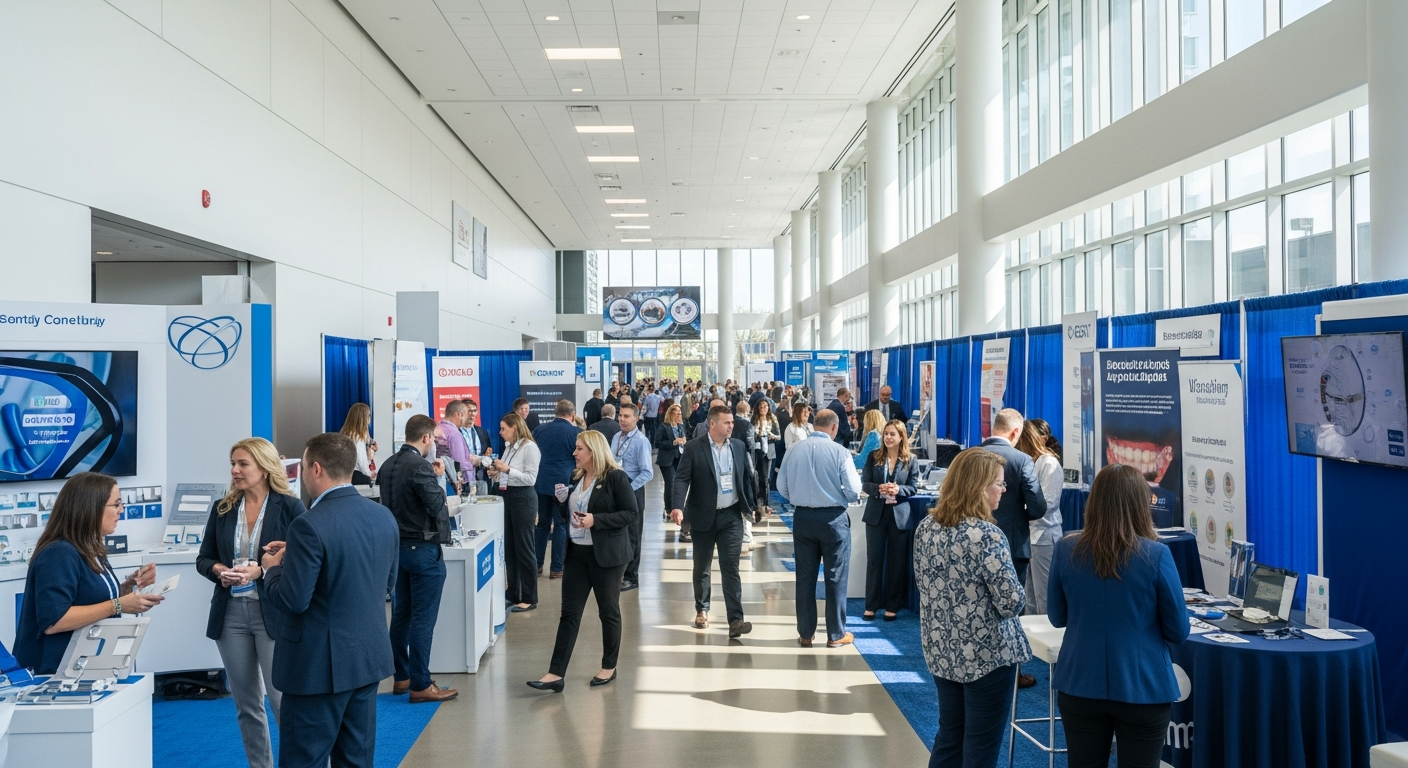
Retail dentistry’s expansion is the private-sector mirror of public-sector triage. A new office opening at Westfield Shops is not just local news; it’s a strategic tell. Shopping centres offer predictable traffic patterns, visible signage, and adjacency to the consumer’s weekly routine. They also encourage a service design that looks and behaves like retail: extended hours, online booking, standardised operatories, and a productised menu. That’s not inherently bad—patients do like convenience—but it changes the competitive unit from “the dentist” to “the system.” In a mall setting, you are not competing against the practice down the road; you are competing against friction. Whoever reduces friction wins. Hence the three-video intake. Hence online scheduling. Hence review management. The practice becomes a conversion machine. And once the machine exists, it demands throughput.
Throughput, however, is where the industry’s current moral hazard hides. We are simultaneously industrialising patient acquisition and worrying—rightly—about whether AI will make dental professionals less expert. The anxiety isn’t Luddism; it’s epistemology. If diagnosis, treatment planning, charting, and patient communication are increasingly mediated by tools that “suggest” and “autocomplete,” the clinician’s role drifts from expert to supervisor. That can be safe in a well-governed system with training, calibration, and audit. It can also be dangerous in the real world of understaffed clinics, rotating associates, and production pressure. When Dentistry UK asks if AI could make professionals less expert, the honest answer is yes—unless organisations deliberately invest in preserving judgement, not just output.
The Manitoba case—where a dentist admitted misconduct in the death of a 23-year-old patient—lands like a thunderclap in this context. Not because it’s representative, but because it’s clarifying. Dentistry has been flirting with an “it’s just a business” posture for years: optimise schedules, maximise chair utilisation, automate communications, standardise everything. But healthcare does not forgive operational arrogance. One catastrophic event can erase years of brand-building, invite regulatory heat, and trigger insurer scrutiny. More importantly, it exposes a key asymmetry: you can automate the pipeline, but you cannot automate accountability. The more dentistry adopts system-level efficiency tools, the more it must adopt system-level governance—clinical standards, incident reporting, peer review, and real quality metrics—not just Google stars.
Then there’s the population health iceberg beneath all this demand engineering. Research linking childhood adversity to higher chronic disease and tooth loss isn’t merely sad; it’s predictive analytics for your P&L. Patients with trauma histories are more likely to present with complex disease, irregular attendance, and higher anxiety—all factors that make the “conversion funnel” harder and the clinical encounter riskier. Add in the mass adoption of GLP‑1 medications like Ozempic and Wegovy, and you’re staring at another wave of demand that doesn’t fit neat production templates. Patients on GLP‑1s report dry mouth, nausea, reflux, altered diet patterns—risk factors that can manifest as caries, erosion, and periodontal challenges. These are not edge cases; they’re increasingly mainstream, meaning your intake process, medical history workflow, and chairside counselling need to catch up. Meanwhile, the viral interest in nasal breathing, facial structure, and “airway dentistry” is a cultural signal: patients are expanding their expectations of what dentistry should address, even as public systems try to narrow the definition of what they will fund.
Technology will not rescue the mismatch between expanding expectations and constrained resources. Dental robotics offers a perfect parable. A review finding robotics clinically mature only in implant placement tells you everything: the tech is viable where workflows are structured, geometry is constrained, and ROI can be modelled around high-margin procedures. It’s not mature where dentistry is messy—diagnostics, comprehensive care, behavioural management, prevention, and the human variability that defines general practice. In other words, robotics is ready for the part of dentistry that already behaves like manufacturing. The rest still behaves like medicine. If your strategy is “we’ll automate our way out,” you will automate the easiest revenue first and still be left with the hardest care.
Put these threads together and the non-obvious trend snaps into focus: dentistry is moving from being clinician-led to being systems-led, and the battle is over who designs the system. On one side are marketers and retail operators building patient-routing machinery—three-video intakes, frictionless booking, mall locations—optimised for conversion and capacity utilisation. On the other side are governments and public health leaders building rationing and prioritisation frameworks—core service definitions, national plans, stakeholder coalitions—optimised for budget discipline and measurable outcomes. Layered on top are AI and robotics vendors offering tools that can either reinforce expertise through decision support or erode it through over-reliance. The clinician sits in the middle, still legally responsible, increasingly operationally constrained.
For industry insiders, the “so what” is blunt. Stop treating these as separate stories—marketing here, policy there, tech somewhere else. They are all gatekeeping architectures, and they will determine who wins, who gets paid, and who gets sued. If you’re running a DSOs’ growth playbook, the three-video intake is not a cute tactic; it’s the front door to a risk-scored care pathway. Build it with clinical input, not just conversion benchmarks. If you’re a private practice owner watching “core service” debates in Northern Ireland or national plan chatter elsewhere and thinking it’s someone else’s problem, you’re missing the point: definitions travel. Once policymakers successfully narrow obligations, commercial insurers follow with coverage design and preauthorisation. If you’re deploying AI, set it up like a clinical device, not a productivity hack: train, validate, audit, and document. And if you’re expanding into retail locations, understand that consumer convenience raises expectations while compressing patience for clinical nuance—meaning your communication, consent, and escalation protocols must be stronger, not weaker.
Dentistry’s next decade won’t be decided by who has the newest scanner or the prettiest Instagram feed. It will be decided by who controls the gate without losing the soul of the profession: who can standardise intelligently without deskilling, automate responsibly without hiding risk, and grow access without pretending that “core service” can substitute for comprehensive health. The waiting room is becoming an algorithm, the operatory is becoming a node in a network, and the dentist is being asked to be both artisan and air-traffic controller. The industry can call that progress if it wants. But let’s at least call it what it is: a power shift. And power shifts, left unmanaged, don’t just change margins—they change outcomes.