business
Dentistry’s New Bottleneck Isn’t Demand—It’s Throughput and Trust
Frictionless booking, preventive imaging and upgraded nursing roles are converging into a single strategic question: who owns the patient journey—and the margin it throws off.
By Marcus Webb ·
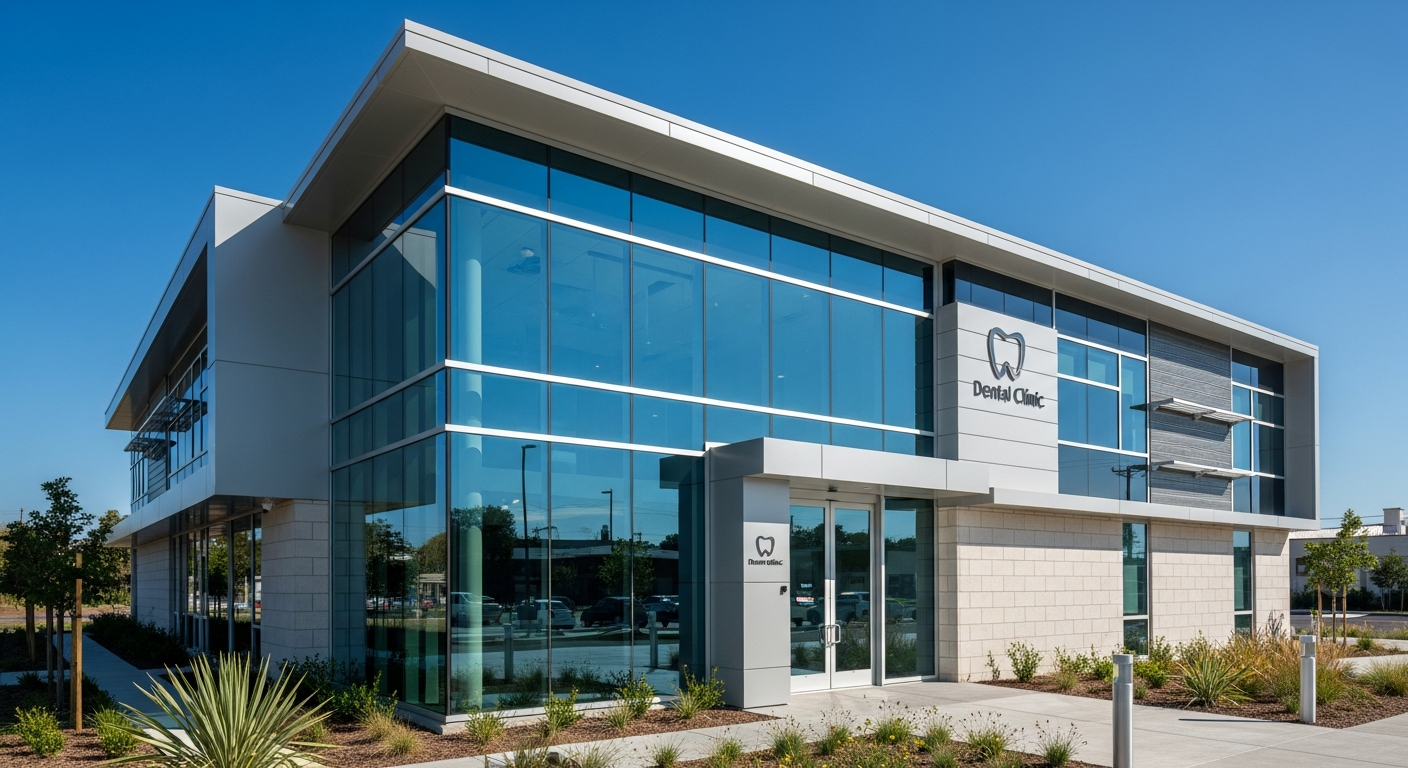
The modern dental appointment is won or lost long before a mirror touches enamel. It’s lost in the five seconds a website takes to load on a phone, in a call that rolls to voicemail at 12:17pm, in an online scheduler that offers the next cleaning in nine weeks, or in a household where halitosis has become so normalised that intimacy stops before care begins. The industry likes to talk about “demand” as if it is an external force—demographics, sugar consumption, NHS access, insurance penetration. But the uncomfortable truth is that much of dentistry’s growth is self-inflicted: practices and DSOs have built high-cost clinical capacity and then leak revenue through conversion friction and untreated avoidance. The non-obvious trend tying this week’s headlines together is that dentistry is becoming a throughput business governed by trust—where marketing ops, workforce design and preventive technology are converging into a single operating system for margin.
Start with the unglamorous but decisive battlefield: the seven-minute funnel from first click to confirmed booking. The Dentainment argument is not that practices need more leads; it’s that they need fewer failure points between interest and an appointment slot. That’s not “digital marketing”—it’s revenue-cycle engineering. A typical practice paying £1,500–£4,000 a month across SEO, PPC and directories can easily generate dozens of inbound inquiries; if half of them fall into a black hole because the call isn’t answered or the online scheduler is restrictive, the practice is effectively paying a toll for nothing. The economics are stark. If a new patient’s first-year value is £400–£1,200 depending on case mix (routine + x-rays + hygiene; or restorative and implants), a single missed booking per day can mean £10,000–£30,000 of annualised revenue foregone per chair—before you even model downstream referrals. In a multi-site DSO, those “tiny” funnel losses become a line item that rivals payroll inflation. The point Dentainment makes—above-the-fold calls-to-action, speed, disciplined call-handling, and scheduling rules that convert—reads like a playbook for retail banking circa 2012. Dentistry is arriving late to a lesson capital markets already priced in: conversion rate is the cheapest growth lever you can pull.
Now overlay what IndexBox is flagging in extraoral cameras: a market growing at a reported 6.2% CAGR through 2035, propelled by preventive dentistry. Extraoral cameras aren’t just a device category; they’re an economic instrument. They compress diagnosis time, increase case acceptance by making pathology visible, and shift the patient conversation from “trust me” to “look at this.” For DSOs, that matters because every incremental percentage point of case acceptance is high-margin revenue captured on fixed overhead. An extraoral camera that costs a few thousand pounds/dollars is not bought for image quality—it’s bought for conversion, just further down the funnel. The same logic driving “seven-minute booking” drives “chairside visuals”: reduce friction, reduce ambiguity, reduce the chances the patient defers. Preventive imaging also changes the mix. It pulls forward intervention into smaller but more frequent procedures—fluoride, hygiene, monitoring—stabilising utilisation and smoothing cash flows. That’s a finance story masquerading as a clinical one: recurring, preventive revenue is a hedge against the lumpy economics of big restorative cases and the referral leakage that plagues fragmented markets.
The missing variable, and the reason this is more than a tech-and-website story, is labour. Dentistry UK’s reporting on the rise of the “oral health practitioner” and the symbolic heft of National Dental Nurse Day 2026 both point to a quiet reallocation of clinical work away from the dentist. In plain terms: practices are being forced to redesign production because dentists are expensive, scarce, and increasingly focused on complex procedures. If you can shift preventive workflows—education, triage, imaging capture, periodontal maintenance—onto highly trained dental nurses and extended-duty roles, you increase throughput without expanding dentist hours. That is not merely workforce “development”; it’s margin defence. In DSOs, labour is the dominant controllable cost, and wage pressure has been relentless. The strategic move is to raise capability at the nursing layer so that each dentist hour yields more high-acuity output. This is why Bupa Dental Care’s international exchange programme for dental nurses between the UK and Australia matters beyond HR optics. It’s a retention and standardisation play: build a career lattice, reduce churn, and replicate best-practice protocols across geographies. When a group invests in nurse mobility, it is effectively investing in operational consistency—the prerequisite for scaling any funnel or technology initiative.
But the industry’s throughput obsession collides with a softer constraint: trust and avoidance. The Guardian’s anecdote about a spouse with such bad breath they haven’t kissed in years, yet still won’t see a dentist, is not just lifestyle journalism—it’s a signal of latent demand that cannot be “marketed” into existence. Avoidance is the silent killer of the appointment funnel. People don’t merely fail to book because the website is slow; they fail to book because dentistry is wrapped in fear, shame, cost uncertainty and past experiences of pain or judgement. This is where community-facing stories—free extractions for patients in need, public reminders about preserving teeth and oral health—should be read with a business lens. Free-extraction programmes in the US and public-health messaging in places like Guyana are moral gestures, but they also reveal a market distortion: many patients are presenting late, in pain, and price-sensitive, when the most profitable and clinically desirable model is early, preventive, scheduled care. The tension for DSOs and larger groups is that the economic model wants predictable recall appointments, but the social reality delivers episodic emergencies and no-shows. Fixing that gap requires more than online scheduling. It requires a staffing model and patient experience that reduces stigma and increases perceived safety—precisely where empowered nursing roles can do the heavy lifting.
Here’s the contrarian conclusion: the next wave of dental consolidation won’t be won by whoever buys the most practices; it will be won by whoever industrialises trust-driven throughput. The deal market has already learned that financial engineering alone can’t outrun weak organic performance. Rising rates and tighter underwriting have pushed buyers to care less about “same-store growth” as a talking point and more about the mechanisms that produce it. Those mechanisms now form a single chain: acquisition spend creates inbound interest; booking architecture converts it; nurse-led workflows and preventive imaging expand capacity and acceptance; and patient experience reduces avoidance so recall becomes habitual rather than aspirational. Break any link—missed calls, under-trained nurses, no visual diagnostics, chaotic scheduling—and the economics unravel. For industry insiders, the “so what” is blunt: treat your website, your nurses and your cameras as one integrated capital allocation decision. Put numbers on conversion loss, attach it to labour design, and invest where friction is highest. In the next cycle, the most valuable dental platforms will not be the ones with the biggest footprint, but the ones that can reliably turn anxious households into scheduled, returning patients—at scale, with a cost of acquisition that finally makes sense.