technology
Dentistry’s New Paradox: More Demand, Less Biological Margin for Error
From laser adoption to nicotine pouches and ageing dentitions, the industry is learning that convenience-driven demand is outrunning periodontal and implant biology.
By Dr. Sarah Chen ·
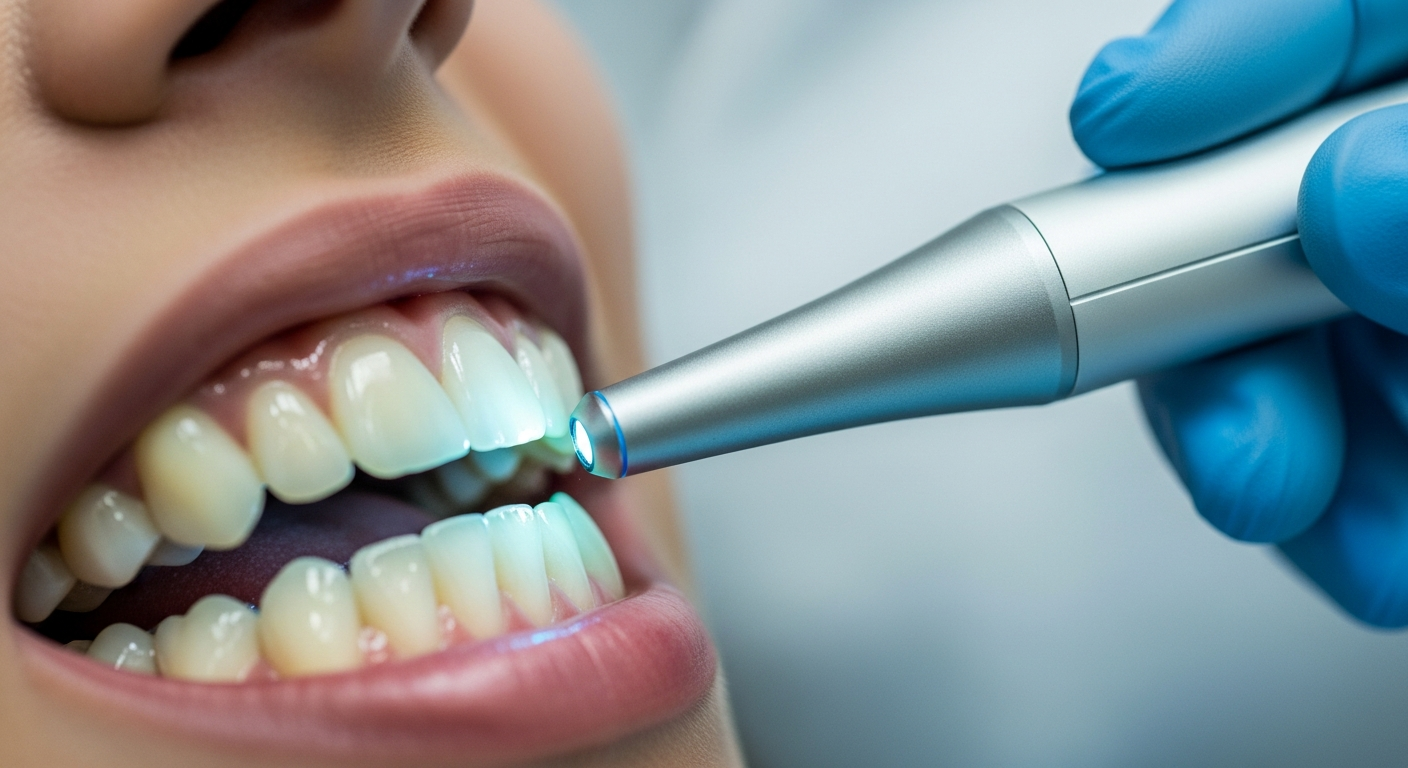
A modern dental operatory can feel like a triumph of optionality: diode or erbium laser, minimally invasive perio protocols, enzyme-enhanced toothpastes, “smokeless” nicotine substitutes, and elective orthodontics marketed as self-care. Yet chairside reality is moving in the opposite direction. Patients are asking for more intervention—earlier orthodontics, more implants, whiter smiles, faster “bloodless” procedures—at the precise moment their biological margin for error is shrinking. That is the non-obvious throughline across this week’s disparate headlines: dentistry is becoming a higher-demand, lower-resilience system. The industry’s next decade will be defined less by dazzling tools than by how rigorously we quantify, triage, and price risk—especially inflammation risk—before we pick up a handpiece or a laser fiber.
Start with the technology story that most readily flatters dentistry’s self-image: lasers. The Cureus narrative review on mechanistic insights and clinical applications is not just another “lasers are cool” recap; it underscores why many clinicians see lasers as the antidote to discomfort, bleeding, and post-op downtime. Photothermal and photomechanical interactions can ablate or coagulate soft tissue, while certain wavelengths show bactericidal effects and decontamination utility in periodontal pockets and peri-implant sulci. In practice, however, the review’s implicit warning is that mechanism is not outcomes. The clinical delta often depends on parameters—wavelength, pulse duration, energy density, water spray, tip angulation—that vary wildly across brands and operator habits. This is the uncomfortable truth that vendors rarely highlight: you don’t buy “better healing”; you buy a new set of variables that can improve precision if you also upgrade your measurement discipline. Otherwise lasers become a premium-priced placebo—excellent at producing patient-perceived modernity, inconsistent at producing reproducible, comparative benefit.
That measurement discipline matters because the foundational biological battle is still plaque-mediated inflammation, not device selection. Consider the Bioengineer.org item reporting that toothpastes containing dextranase and isopropyl methylphenol are linked to lower dental plaque scores. That’s not a sexy category: it’s incremental, chemical-biological optimization of daily self-care. But it points to an industry pivot that is easy to miss: when patient demand accelerates (orthodontics, implants, cosmetic recontouring), the only sustainable way to keep failure rates down is to lower the inflammatory baseline before and after treatment. Dextranase targets extracellular polysaccharides that help plaque adhere and mature; isopropyl methylphenol is an antimicrobial used in oral care markets, especially in parts of Asia. The signal here is not that these actives will “solve” caries or gingivitis. The signal is that the commercial winners will be those who treat plaque score reduction as an outcomes metric connected to downstream procedures: fewer bleeding sites, better orthodontic hygiene tolerance, reduced peri-implant mucositis incidence, fewer emergency visits, and higher case acceptance for complex care. In other words, the future is less about adding new interventions and more about de-risking the patient’s inflammatory phenotype so those interventions can survive.
Now layer in the behavioural shift that could quietly sabotage these gains: nicotine pouches. Today’s RDH’s discussion of nicotine pouches and oral health lands at a moment when patients increasingly treat “smoke-free” as “risk-free”. Clinically, that leap is unearned. Pouches remove combustion products, but they maintain nicotine exposure and, often, localised mucosal contact with a chemically active matrix. The dental impact we see in real practices is rarely a single pathognomonic lesion; it’s a pattern: mucosal irritation at the placement site, xerostomia complaints, altered taste, and patients who under-report use because they don’t classify it as tobacco. Add nicotine’s vasoconstrictive effects and the familiar problem returns under a new brand name: inflammation that is harder to read clinically and healing that is harder to predict. This matters because the industry is simultaneously selling more procedures that depend on soft-tissue quality and immune competence: peri-implant maintenance, laser-assisted perio protocols, elective gingival recontouring, aligners in borderline hygiene patients. If pouches expand usage among younger demographics—precisely the cohort driving orthodontic and cosmetic demand—dentistry will face a behavioural headwind that technology cannot out-innovate.
The Vietnamese school study, also via Bioengineer.org, makes that demand shift explicit: adolescent orthodontic demand exceeds clinically assessed need. This is not merely a public health curiosity; it is a pricing and ethics problem with direct operational consequences for practices and DSOs. Orthodontic demand used to be anchored in functional need and professional referral patterns; increasingly, it is consumer-driven, aesthetic, and accelerated by social media norms. The mismatch between assessed malocclusion severity and expressed desire for treatment is effectively a new kind of “disease definition expansion”—aesthetic dissatisfaction presented as health need. For clinicians, that creates a tension: more elective orthodontics can subsidise preventive care and broaden access, but it can also pull capacity away from higher-risk medical-oral intersections, especially as populations age. It also raises a clinically under-discussed risk: when the driver is preference rather than pathology, tolerance for adverse effects (white spot lesions, gingival inflammation, recession) is lower, and the demand for rapid turnaround is higher. This pushes practices toward protocols that promise speed and comfort—again, lasers and adjuncts—while the true determinant of outcome remains hygiene adherence and inflammatory control.
The implant story brings the biological margin issue into harsh focus. Bioengineer.org’s report that dental implants show higher failure rates when placed directly inside fibro-osseous jaw lesions is a reminder that osseointegration is not a branding exercise; it is a host response constrained by local pathology. Fibro-osseous lesions—whether fibrous dysplasia-like changes or other mixed radiolucent-radiopaque entities—can mimic “bone” on imaging yet behave unpredictably under surgical and loading conditions. In an era when implants are marketed as routine and immediate, and when patients arrive with longer life expectancy and higher expectations, the temptation is to normalise borderline indications. The clinical consequence is expensive failure: explantation, grafting, prolonged temporisation, and reputational damage in review-driven markets. The economic consequence is even larger: re-treatment consumes chair time and erodes margins because the second surgery is rarely reimbursed at the same rate—financially or emotionally. This is where the ageing story from DrBicuspid—patients living longer, but can their teeth keep up—intersects with elective demand. Older adults keep more teeth, yes, but they also carry more restorations, more root caries risk, more xerostomia from polypharmacy, and more cumulative periodontal attachment loss. They are simultaneously better candidates for sophisticated rehabilitation and worse candidates for biological surprises.
Global workforce narratives and paediatric clinic portrayals might seem like soft features, but they reveal the industry’s quiet restructuring around prevention and systems-thinking. Mannat Tiwana’s path from dentist to NIH Fogarty Fellow is emblematic of a growing cohort of dental professionals who see oral health as a global, chronic-disease platform—linked to diabetes, cardiovascular disease, pregnancy outcomes—not as an isolated craft. Dentistry UK’s profile of moving from scale-and-polish to leadership in health optimisation echoes the same evolution at home: hygienists and therapists stepping into risk-factor coaching, behaviour change, and care navigation. The Korea Times’ look inside a Korean paediatric dental clinic—and even the legal-flavoured “first dental visit” guide from Tribeca Dental Studio for Kids—point to an increasingly standardised, experience-engineered paediatric pipeline. The industry is professionalising the front end of the lifetime oral health curve: earlier visits, stronger parental education, more structured acclimatisation. On paper, this should reduce disease burden. But paired with the orthodontic demand data, it also suggests that paediatric dentistry is becoming a gateway not only to prevention but to consumer-driven treatment pathways. If we don’t hardwire risk assessment into that gateway, we will simply create earlier customers, not healthier adults.
What ties these threads together is not “innovation” but triage. Dentistry is entering a period when patient volume and expectations rise while biological resilience—shaped by nicotine products, ageing, systemic disease, and local pathologies—falls. In that world, the strategic asset is not the newest wavelength or aligner system; it is an operating model that can detect risk early, quantify it in ways patients understand, and modulate treatment intensity accordingly. Practices should be treating plaque scores, bleeding on probing, salivary flow complaints, and nicotine pouch use as core pre-op vitals—documented, trended, and used to set prerequisites for elective care. If a toothpaste active can lower plaque scores measurably, that becomes part of a peri-orthodontic or peri-implant protocol, not a retail afterthought. If lasers can reduce bacterial load or improve soft-tissue management, they must be deployed with parameter discipline and outcome auditing, or they will become another capital expense justified by vibes.
Industry insiders—manufacturers, DSOs, insurers, and educators—should take the “higher demand, lower margin for error” paradox seriously because it will reshape where value accrues. The next premium category is likely to be risk management packaged as care: structured nicotine screening and cessation pathways embedded in hygiene; standardised plaque and gingival inflammation metrics that determine eligibility for aligners or implant surgery; imaging and pathology protocols that flag fibro-osseous lesions before implant planning; and paediatric journeys that emphasise caries-risk and behavioural coaching as much as “first visit” comfort. The commercial implication is blunt: elective dentistry will keep growing, but the winners will be those who can say no—selectively, defensibly, and with data—because they have built a system that protects outcomes. In a market where reputations are algorithmically fragile and re-treatment is financially corrosive, the most profitable dentistry may be the dentistry you delay until biology is ready.
The industry’s temptation will be to treat each development as a separate vertical: lasers as capital equipment, nicotine pouches as patient education, enzyme toothpastes as consumer goods, orthodontic demand as marketing, implants as surgery, paediatrics as branding. The deeper reality is that they are all different faces of one clinical-economic constraint: inflammation and tissue response set the ceiling for everything else. Dentistry’s future, then, is less a story of new tools and more a story of new thresholds—clear, measured biological thresholds that determine when we intervene, what we promise, and how we get paid. Those who build around that constraint will not just deliver better care; they will own the industry’s most defensible margins.