technology
Dentistry’s Next Competitive Edge Is Trust, Not Just Technology
AI scoring, digital imaging, regenerative science and SEO ladders are converging on a single bottleneck: credibility at the chairside and in public view.
By Dr. Sarah Chen ·
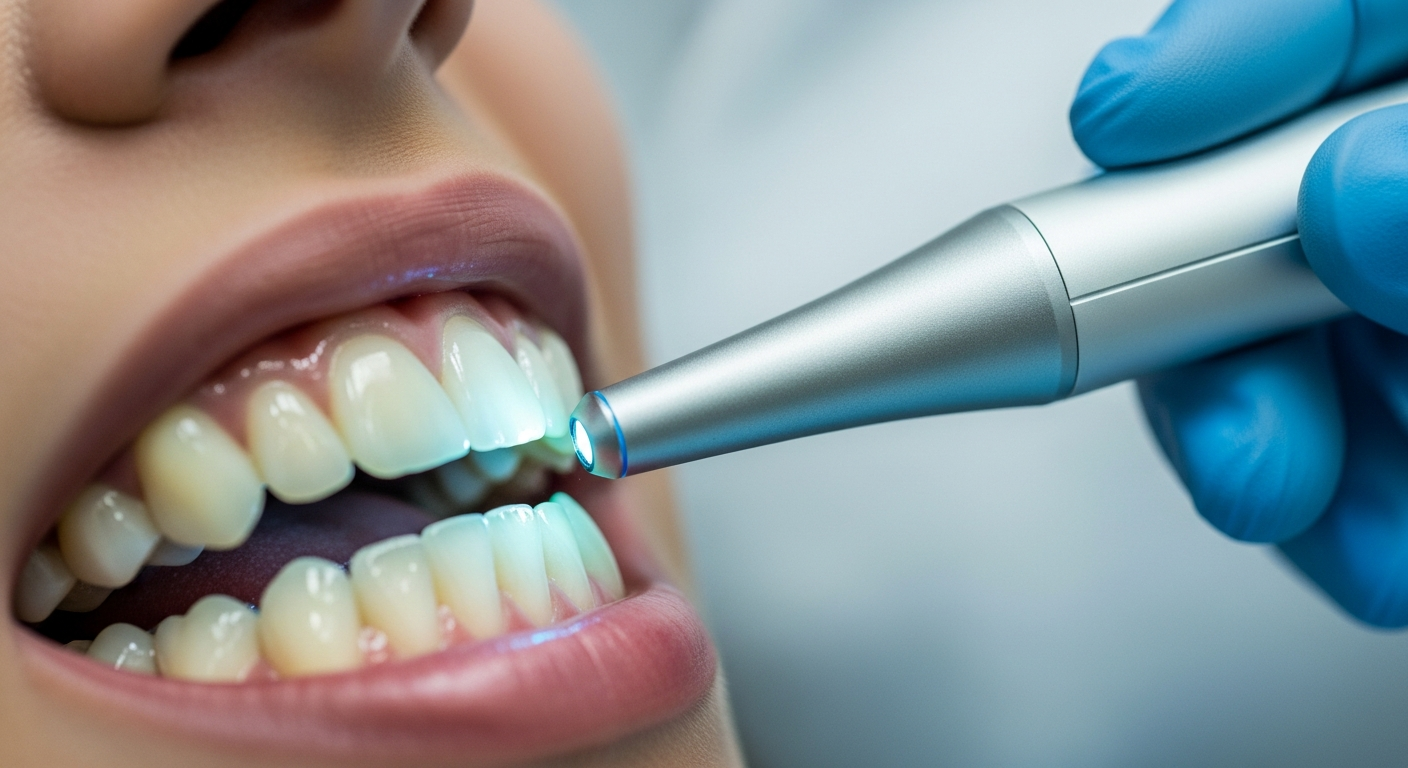
A dental practice can now buy a CBCT unit, subscribe to an AI radiology service, and publish a “topic ladder” blog series that captures the exact moment a patient types “do I need a crown or a filling?” Yet the industry’s most decisive constraint is neither sensor resolution nor model architecture. It’s legitimacy. In the same news cycle that celebrates deep learning tools for evaluating cavity preparations and new pathways toward natural tooth regeneration, a Phoenix-area dentist faces multiple sexual exploitation charges, and another office draws headlines for offering free extractions. These are not unrelated stories. They are signals that dentistry is entering a credibility economy in which patients, payers, regulators and courts will increasingly ask not whether you have the latest technology, but whether your decisions—clinical, operational and ethical—are transparent, explainable and worthy of trust.
Start with the quiet admission embedded in the research: deep learning can evaluate cavity preparations, but it still falls short of expert accuracy. That is not a failure; it’s an important calibration point. Dentistry is structurally different from many medical imaging tasks because “ground truth” is often contested. Two experienced clinicians can disagree on ideal taper, marginal design, caries removal endpoints or whether a preparation is overextended—especially in complex occlusal anatomy. When an algorithm is trained to score preparations, it inherits every ambiguity in the labels and every bias in the training set, and then it outputs a number that looks authoritative. In the operatory, that authority can be intoxicating: a score, a heatmap, a red flag, a “pass/fail” overlay. But a model that is marginally less accurate than experts is not neutral; it is a new source of liability if it nudges novices toward over-preparation, under-reduction or aggressive caries removal in the wrong patient. That risk escalates when the clinician cannot explain the model’s reasoning in anatomical terms. The “machinometrics” framework highlighted in recent coverage—linking AI heatmaps to physical attributes for explainability—should be read as a governance story, not a feature story. Explainability is becoming a clinical safety requirement, because “the model said so” will not satisfy a patient, a board complaint, or an attorney.
This is where dental education’s renewed emphasis on digital imaging becomes more than curriculum modernization. When Dentistry UK talks about shining a light on digital imaging in education, the implication is that the next generation will treat imaging as the primary lens through which diagnosis and treatment planning are learned. That is broadly positive: better diagnostics, more consistent documentation, and improved calibration across instructors and students. But it also means we are training clinicians to interact with dentistry through interfaces—heatmaps, segmentation masks, automated measurements—where the seductive precision of pixels can outpace biological nuance. If educators do not explicitly teach what AI does not know, we will produce graduates who can operate a workflow but struggle to defend it. The profession should be honest: CBCT use has expanded faster than the average practitioner’s comfort with incidental findings, dose optimization, and medico-legal documentation. Add AI triage and automated reporting, and the standard of care will not merely rise; it will change shape, becoming as much about documentation, justification and informed consent as about the bur angle. The winners will be the schools and vendors that build “explainability literacy” into training—students learning to translate model outputs into clinical rationales, and to recognize when the model is outside its competence.
Now consider the marketing story that, on the surface, seems unrelated: the “Dental Topic Ladder” argument that most dental blogs fail because they chase broad keywords instead of patient decision moments. That is not just an SEO tactic; it’s a proxy for how patients now adjudicate trust. Search is where chairside relationships increasingly begin, and high-intent queries—“Is a root canal necessary?” “What does a cracked tooth feel like?” “Can a filling replace a crown?”—are moments when patients are effectively asking for informed consent in advance. A laddered content system that answers those questions with specificity, credible citations, and realistic ranges of outcomes is not marketing fluff; it is pre-visit clinical communication. It can reduce no-shows, align expectations, and lower the temperature of disagreements about diagnosis and cost. But the same mechanism can also magnify ethical risk. If a practice’s content is optimized to “convert” without rigorous clinical accuracy—if it normalizes elective treatment as inevitability, or frames extractions as quick fixes without discussing downstream consequences—it becomes discoverable evidence in the event of a complaint. In the credibility economy, the blog post is part of the medical record in spirit, even if not in law.
The local-business headlines underline the same tension from two angles. In Batavia, a dentist breaking ground on West Main Street is framed as civic progress—investment, expansion, the visible confidence of a small healthcare business in a volatile economy. In Corpus Christi, Yassin Family Dentistry offering free tooth extractions is framed as charity, but it is also a stark reminder that oral health access still collapses into episodic surgery for many Americans. Put these side by side and you see the uncomfortable truth: dentistry is simultaneously capital-intensive and access-fragile. A modern build-out can run into seven figures when you factor in real estate, equipment, and staffing. A single CBCT unit can cost in the tens of thousands before service contracts; a multi-operatory expansion quickly multiplies that. Yet the demand-side reality is that large segments of the population cannot absorb even routine preventive care, leading to charity extraction events that are medically necessary but systemically tragic. This is fertile ground for distrust. Patients who experience dentistry as either a gleaming retail expansion or a free-extraction line can reasonably wonder whether the system is designed for health outcomes or for throughput and financing.
That distrust is rocket fuel for reputational catastrophe when ethical failures occur, and the Phoenix sexual exploitation charges illustrate the profession’s harshest asymmetry: one clinician’s conduct can taint public perception of many. Dentistry’s privacy, physical proximity, sedation options, and power imbalance make it uniquely vulnerable to abuse—and uniquely dependent on trust. In such a climate, technology is not automatically reputationally protective. In fact, it can worsen the optics if it appears to automate persuasion or obscure accountability. Imagine a patient reading about AI evaluating preparations and regenerative tooth research while also seeing news of exploitation charges. The cognitive leap is not hard: “If they can build algorithms and regenerative materials, why can’t they police their own?” The profession’s answer cannot be PR. It has to be systems: chaperone policies, camera rules and consent protocols where appropriate, transparent complaint pathways, rigorous credentialing, and a culture that treats boundary violations as safety events—not private matters.
Even the seemingly benign oral health story about sugar-free cranberry juice fits the pattern. The ADA’s framing—potential oral health benefits without added sugar—signals a broader shift toward evidence-based consumer guidance. Patients are hungry for simple, actionable preventive steps, but they also live in a marketplace flooded with confident wellness claims. Dentistry can either lead with measured, data-anchored guidance or cede the territory to influencers and supplement brands. The caution here is that the same patient who will trust the ADA on cranberry polyphenols will also expect that level of evidence in your AI claims, your imaging recommendations, and your treatment narratives. This is not about being conservative; it is about being falsifiable. If you recommend a product or a procedure, your rationale must withstand a Google search—and, increasingly, a screenshot.
The most exciting science in this news mix—UIC researchers investigating dentin phosphophoryn to enable natural tooth regeneration—raises the stakes further. Regeneration is the kind of breakthrough that will reprice entire categories of care, from restorative dentistry to endodontics to implantology. But it will also intensify scrutiny. When a field moves from replacement to regeneration, patients assume the system has advanced beyond compromise solutions. If a practice is still pushing aggressive preparations while simultaneously advertising “next-gen” biologics, patients will detect the mismatch. Regenerative science will force the profession to become more coherent: a more conservative restorative philosophy, deeper preventive emphasis, and more nuanced risk communication. That transition will be bumpy, and it will reward organizations that can translate complex biomolecular mechanisms into clear clinical indications and limitations.
For industry insiders, the “so what” is blunt: the next defensible competitive advantage is not another AI demo or another content funnel. It is a trust stack—explainable algorithms, documented imaging protocols, evidence-based patient communication, and governance that anticipates regulatory and reputational shocks. Vendors should expect purchasers to demand validation data, failure-mode disclosures, and auditability, not just accuracy claims. Schools should teach students how to challenge algorithmic outputs, document clinical reasoning, and communicate uncertainty. Practices should treat marketing copy, consent forms, imaging reports and chaperone policies as a single integrated system for risk management and patient respect.
Dentistry has long been a technology-forward profession, but the next decade will not reward novelty alone. It will reward those who can prove, in plain language and in hard documentation, that their technology serves patients rather than the other way around.