industry
Dentistry’s New Job: Triage the Body While Selling the Software
From oral cancer screening to dementia clues, dentistry is being recast as frontline medicine—just as platforms, politics and pay reshape who gets access.
By Brad Newman ·
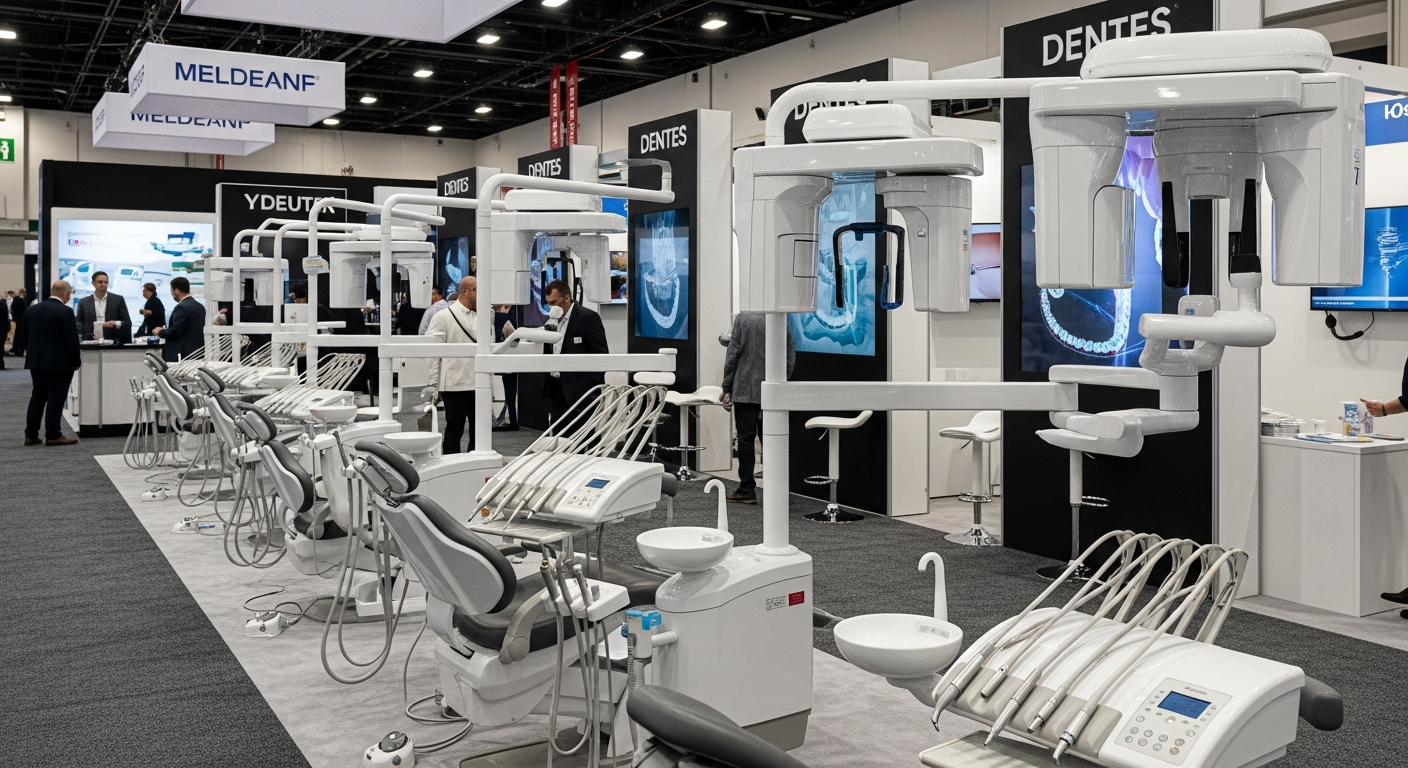
Here’s the heresy I can’t stop thinking about: the average dental appointment is now doing more work for the healthcare system than the healthcare system is doing for dentistry. We keep telling ourselves we’re in the “oral health” business. Increasingly, we’re in the early-detection, risk-flagging, behavior-changing business—often for conditions medicine is missing or catching late. Mouth cancer. Sleep-disordered breathing. Cognitive decline. And we’re attempting this while the industry’s operating system is being consolidated in real time, while Washington is being lobbied to take oral health seriously, and while the workforce—quietly, expensively—demands to be treated like the clinical asset it is. The non-obvious trend tying the week’s headlines together is this: dentistry is becoming a triage layer for whole-body health at the exact moment it’s being industrialized by software platforms, politicized by policy fights, and stress-tested by labor markets. That combination can either elevate the profession or hollow it out.
Take oral cancer. The clinical point is obvious; the operational point is not. When Dentistry.co.uk argues “every appointment counts,” it’s not just a feel-good admonition for hygienists to peer under tongues. Oral cancer incidence in the UK has been climbing for years; in the US, the American Cancer Society estimates roughly 58,000 new oral cavity and oropharyngeal cancers in 2024, with more than 12,000 deaths. Early-stage survival is dramatically better than late-stage, and dentistry is where asymptomatic patients actually show up. But here’s the uncomfortable part: if every appointment counts, then every missed appointment is a clinical risk externality. That turns no-shows, scheduling bottlenecks, and workforce churn from “practice management annoyances” into population-health failures. And it forces a question the industry avoids: are we building systems that reliably surface red flags—or are we relying on heroics and memory?
Now pull in Yahoo’s reporting on a distinctly un-sexy condition in older adults—periodontal disease and tooth loss patterns being explored as potential warning signs associated with dementia risk. The causality is still contested; associations don’t equal mechanisms. But even the possibility reframes the dental chart. Add Dentistry.co.uk’s “time to rethink the rinse?”—a seemingly narrow debate about mouthwash and the oral microbiome that, if you take it seriously, is really a debate about the unintended systemic effects of routine dental advice. Then throw in anti-snoring appliances: not a boutique add-on anymore, but a gateway into sleep medicine, cardiometabolic risk, and the messy overlap of dental and medical reimbursement. If you’re a practice owner, the takeaway isn’t that you should suddenly become a neurologist, oncologist, and sleep physician. It’s that your chair is one of the few recurring touchpoints with healthy-but-aging adults. Dentistry is being recruited—quietly, inexorably—as the surveillance infrastructure for chronic disease.
And that’s where the tech story stops being “just software.” DrBicuspid reports Planet DDS entering Canada as dentalcorp subsidiary CDS moves clinics to Denticon. On its face, it’s another platform expansion: a US practice management vendor extends north; a consolidator standardizes workflows across clinics. But put that next to the clinical screening narrative and the stakes change. When your business model relies on more structured data—risk factors, lesion documentation, sleep questionnaires, referral tracking—you are only as good as the system that captures and routes it. Consolidators love standardization because it wrings variation out of operations. The risk is that the same standardization can wring judgment out of care if the workflow becomes a series of boxes to tick so the dashboard turns green. The promise is real: integrated imaging, structured notes, automated recalls, and analytics can make “every appointment counts” something you measure, not something you preach. The peril is equally real: once triage is embedded in a platform, it becomes a liability surface, a billing surface, and—inevitably—a performance metric. When oral cancer screening becomes an auditable workflow element, it will be managed like production.
That industrialization collides with the politics story. The Dental Trade Alliance’s “Oral Health Can’t Wait” push on Capitol Hill reads like a trade group doing what trade groups do: trying to move policy in a friendlier direction, especially around coverage, workforce, and the integration of oral health into broader health initiatives. Fine. But let’s call the deeper issue what it is: dentistry has long survived on a cultural fiction that it is adjacent to healthcare rather than inside it. That fiction is collapsing. If policymakers increasingly view the dental office as a frontline health checkpoint—screening cancers, flagging sleep apnea, catching frailty signals—then the old carve-out logic of dental benefits looks less defensible. So the DTA’s strategy isn’t just lobbying for “oral health” out of moral necessity; it’s a bid to position the dental supply chain and delivery system inside the larger reimbursement and public health tent before someone else draws the lines. The winners in Washington will be the players who can translate dentistry’s value into the language that lawmakers hear: avoided costs, earlier diagnoses, better outcomes, and measurable access. The losers will keep showing lawmakers pictures of smiles.
Access, of course, is where the glossy narratives fall apart. Bioengineer.org’s reporting on rural India—barriers, delayed seeking of care—shouldn’t be read as a distant humanitarian vignette. It’s a mirror held up to every market where dentistry is episodic, cash-constrained, and geographically uneven. The mechanisms differ—distance, cost, cultural beliefs, provider scarcity—but the result rhymes: conditions are caught late, pain drives utilization, prevention is theoretical. The “every appointment counts” framing assumes the appointment happens. In huge swaths of the world, and in plenty of rural or low-income pockets in wealthy countries, the appointment doesn’t. If dentistry is going to be a triage layer for systemic disease, access isn’t a side quest; it’s the plot. Which brings us to labor and wages.
Dentistry.co.uk’s piece on a practice paying the Living Wage and calling it “one of the best business decisions we’ve made” will irritate some owners, and good—it should. Labor is the most important constraint in dentistry right now, and pretending otherwise is managerial malpractice. Hygienists, dental nurses/assistants, and front-desk teams are not interchangeable cost lines; they are the delivery system. If your assistant turnover is high, your screening protocols will be inconsistent. If your reception team is underpaid and overwhelmed, your no-show rate will be higher, your recall system will degrade, and your “triage layer” fantasy collapses. Paying a Living Wage isn’t charity; it’s risk management and throughput protection. In a world where dentistry’s value proposition is shifting toward prevention and early detection, the practice that wins is the one that can retain a team capable of noticing subtle changes, documenting them properly, and navigating referrals. That is not a minimum-wage job description.
Now, stitch in the seemingly unrelated scandal: a dental dean resigning after an antisemitic content probe. It’s tempting to treat that as academic drama, separate from the business of care delivery. It isn’t. Dentistry is asking to be taken seriously as healthcare’s triage layer—trusted, ethical, evidence-based, culturally competent. Institutions that train clinicians are part of that trust supply chain. When leadership fails basic standards, it doesn’t just tarnish a school; it hands ammunition to every skeptic who thinks dentistry is a clubby trade rather than a serious health profession. And at the exact moment dentistry is trying to persuade policymakers, payers, and patients that it belongs in the bigger healthcare conversation, reputational self-sabotage is not a rounding error. It’s a strategic liability.
So what is the actual through-line? Dentistry is being pulled upward into medicine’s orbit—by epidemiology, by patient expectations, by the economics of early detection—while being pushed sideways into industrial-scale operations by software consolidation and corporate standardization. Those forces are not automatically aligned. The medicalization of dentistry demands time, judgment, and careful documentation. The industrialization of dentistry rewards speed, uniformity, and measurable outputs. Put bluntly: the same platform that can help you flag an oral cancer lesion can also nudge you to prioritize what’s billable over what’s clinically meaningful. The same lobbying campaign that argues oral health is essential can be used to justify new compliance burdens without new reimbursement. The same wage increases that stabilize your team can squeeze margins in systems that already treat dentistry like a commodity.
Industry insiders should stop pretending this is a theoretical tension. It’s already showing up in the most mundane decisions: Do you build a standardized oral cancer screening protocol that is actually done, documented, and followed up—or do you rely on clinician discretion and hope for the best? Do you choose a practice management platform for its billing efficiency, or for its ability to capture structured clinical risk data and close referral loops? Do you invest in training your hygienists to talk about HPV-related oropharyngeal cancer risk, sleep apnea screening, and cognitive red flags—or do you keep them on a treadmill of prophys because the schedule is full? Do you pay a wage that retains talent—or do you accept churn and call it “the market”? These are not soft questions. They determine whether dentistry becomes a credible, integrated health checkpoint or a high-throughput retail service with occasional medical pretensions.
My view is that the profession has a narrow window to choose the first path. If dentistry can prove—using real data, not brochures—that routine visits reduce late-stage oral cancer diagnoses, improve sleep apnea identification, and create earlier interventions in older adults, policymakers will have fewer excuses to keep oral health segregated from broader health coverage debates. But that proof will not come from slogans. It will come from systems: platforms that capture the right clinical signals, teams paid and trained well enough to act on them, and institutions led with integrity. Otherwise, the industry will get the worst of both worlds: more responsibility for screening and referral, more liability and compliance, and the same fragmented reimbursement that makes access a privilege.
The punchline is uncomfortable because it’s so operational: the future of dentistry may hinge less on the next miracle material or whitening trend than on whether we can turn the dental appointment into a reliable, humane triage encounter at scale. Planet DDS’s march into Canada and the consolidators’ appetite for standardization can help—if the workflow is built around patient outcomes, not just productivity. The DTA’s Capitol Hill strategy can help—if it fights for integration with funding, not integration with paperwork. Living Wages can help—if owners accept that the team is the product, not an expense to be minimized. And yes, every appointment counts—especially in a world where too many people never get one.
If you want a single metric to watch, it’s not EBITDA per chair or software conversion rates. It’s closure: how many clinically meaningful findings—suspicious lesions, sleep risk flags, frailty indicators—actually result in documented follow-up, referral completion, and patient understanding. Dentistry is being asked to catch what others miss. The industry can either build the infrastructure to do that with credibility, or it can keep congratulating itself on “awareness” while the real work gets lost in the click-path.
The next time someone tells you the dental industry is boring—fillings, fluoride, and the occasional spat over mouthwash—remind them: dentistry is becoming the front door to healthcare for millions, and front doors require more than pretty signage. They require locks, lighting, trained staff, and a clear line of sight to what happens after you step inside.