practice
The New Scarcity in Dentistry Isn’t Patients. It’s Operational Trust
Marketing fixes, staffing hacks, and shiny tech all fail when execution erodes. The next competitive edge is disciplined systems that patients and teams can reliably believe in.
By Jennifer Park ·
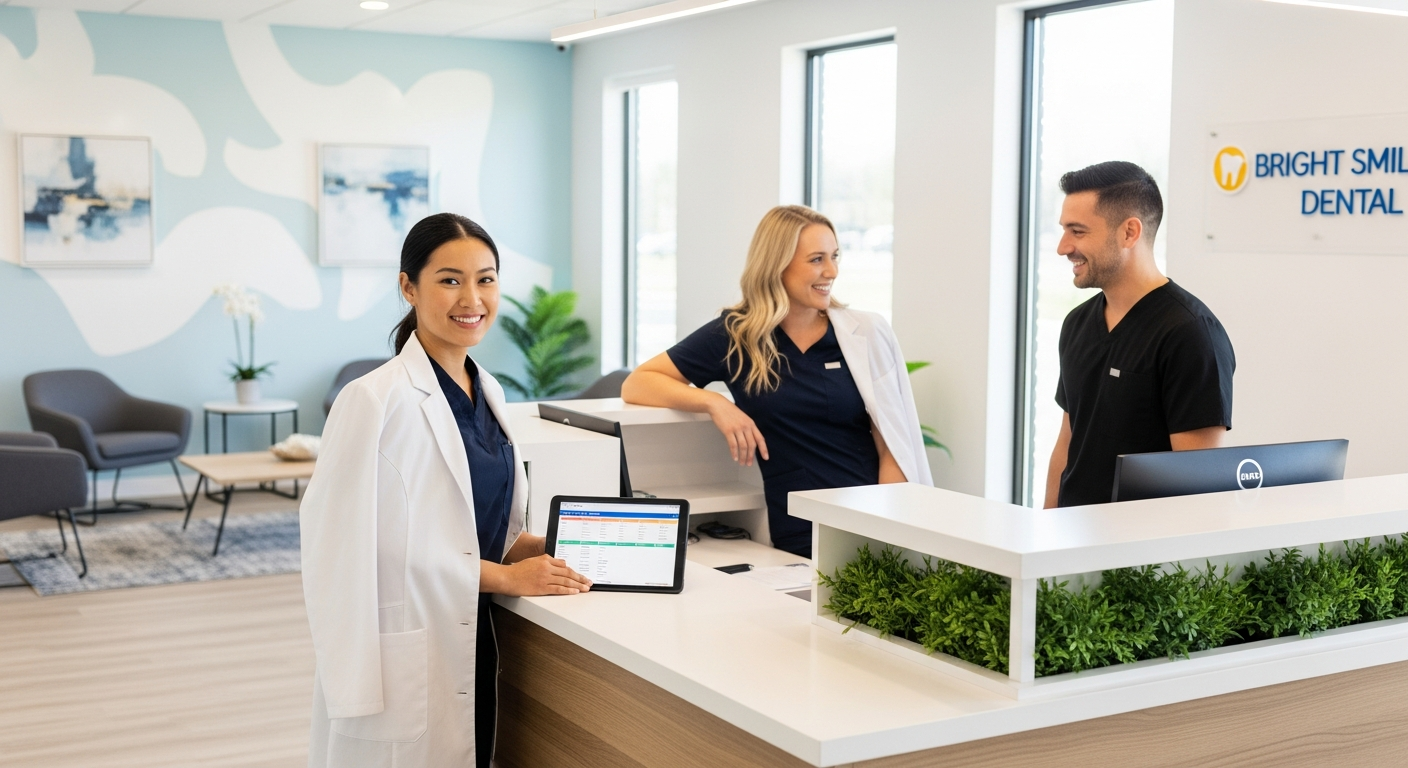
A well-run practice doesn’t lose patients; it leaks them. Not in the dramatic way owners like to blame on “competition” or “the economy,” but through micro-failures that feel small inside the office and decisive outside it: the unanswered voicemail at 4:55 p.m., the hygiene reschedule pushed out four months, the hand hygiene shortcut no one talks about, the treatment plan that never gets followed up because the coordinator quit. That’s why the most useful thread running through this week’s seemingly disconnected stories—reactivation playbooks, staffing crisis commentary, a Google Ads “leak audit,” digital dentistry readiness, military service tributes, even a license revocation after a patient death—is a non-obvious one: dentistry’s new scarcity isn’t patient demand or technology. It’s operational trust. And trust, unlike demand, cannot be purchased quickly.
Start with the “good news” many offices are celebrating: you can refill hygiene without discounts. Dentainment’s 21-day reactivation sequence is a pragmatic blueprint precisely because it assumes what operators know is true—dormant patients are often simply unprompted. Send the right message at the right cadence, include a clean scheduling call-to-action, and you can turn an inactive chart into a booked prophy. Pair that with a disciplined Google Ads leak audit—another Dentainment piece that acknowledges the mundane reality that most waste is “death by a thousand irrelevant clicks”—and the top of the funnel looks solvable. In real numbers, that matters: Google search ads in most markets are now expensive enough that sloppy account structure is a silent tax. If you’re paying $8 to $25 per click for “dentist near me” variants in competitive metros and converting 5% to calls and 40% of calls to scheduled appointments, a single scheduled patient can easily cost $50 to $250 before a front-desk payroll dollar touches it. If, instead, you’re buying irrelevant intent—job seekers, Medicaid mismatches, “free dental,” “cheap implants”—your cost per scheduled patient can double without anyone noticing until the P&L looks “mysteriously” tight. Marketing discipline can find money.
But this is the tension owners are about to confront more painfully: it is easier to generate appointments than to keep the promises those appointments imply. The staffing crisis isn’t just a recruiting problem; it’s a throughput problem disguised as a labor problem. Patterson’s Off the Cusp piece argues that the right people, technology, and operational support can help practices deliver exceptional care amid staffing challenges. True—and incomplete. In the operator’s seat, the limiting reagent is no longer clinical skill; it’s reliable execution across the whole patient journey when you’re running short a hygienist, training a green assistant, and covering phones with someone who also checks out patients. A 21-day sequence might put 30 overdue recare patients back onto the schedule. Great. Now ask the unglamorous question: can your team actually deliver 30 additional hygiene visits in the next 60 days without running behind, burning out, or turning your existing patients into your next batch of “dormant” charts? If you can’t, the reactivation sequence becomes a reputation accelerant—not a revenue engine.
This is where the softer stories about service and legacy are doing more work than they appear. Western University’s Schulich Medicine & Dentistry reflection on military service, and TheCitizen.com’s profile of Dr. Alicia Frank moving from Air Force dentistry to family practice, aren’t just feel-good pieces. They’re reminders that dentistry is, operationally, a high-reliability occupation masquerading as a small business. Military healthcare trains clinicians to execute standards under constraint: protocols, redundancy, and a culture where basic hygiene and chain-of-custody aren’t optional because “we’re busy.” In civilian private practice, the constraint is different—insurance friction, staffing churn, consumer expectations—but the lesson transfers. When teams are thin, the first thing to erode is consistency. Consistency is the substrate of trust. And trust is what keeps patients showing up on time, agreeing to treatment, and referring friends. A 20-year celebration like 1st Impressions Dentistry’s community milestone in Calaveras County is, at its core, a trust story: longevity isn’t built on a single charismatic doctor or a one-time marketing win. It’s built on thousands of competent, forgettable, reliably good days.
The industry’s growing fascination with education and technology sits on the same fault line. Dr. Scott Leune’s expansion of sold-out dental seminars beyond San Antonio in 2027 is a market signal: doctors are hungry for frameworks that promise predictability—clinical, financial, or both. Meanwhile, a review flagged by Bioengineer.org finds favourable attitudes but uneven knowledge in digital dentistry. That’s not a surprise to anyone running a practice: buying a scanner is easy; integrating it into scheduling templates, assistant roles, case presentation, lab communication, and remakes is hard. Digital dentistry is sold as speed and precision, but in practice it often exposes operational weakness. If the assistant turnover is high, scan quality varies; if the doctor is behind, scanning becomes the bottleneck; if the team isn’t trained to explain digital workflows, case acceptance doesn’t move. Technology doesn’t create trust by itself. It can, however, destroy trust quickly when it fails in front of a patient or when the office uses it as a substitute for fundamentals.
Fundamentals, inconveniently, are where risk now lives. Today’s RDH’s deep dive into alcohol-based hand sanitizer effectiveness against non-enveloped viruses reads like a clinical refresher, but its operational implication is sharper: the basics are not “done.” Even in mature practices, compliance drifts. And drift becomes dangerous when you layer in volume growth tactics. More ads, more reactivation, more hygiene “filled” does not mean better outcomes; it can mean more opportunities for a single weak link to snap. DrBicuspid’s report of a dentist whose license was revoked after a patient death is a grim reminder that dentistry is not insulated from catastrophic downside. Regulatory bodies and juries do not grade on a curve for staffing shortages, a busy day, or a practice in transition. The public’s tolerance for “we were short-handed” as an explanation is effectively zero. In that environment, operational trust is not just a competitive advantage; it is an existential requirement.
Here’s the uncomfortable synthesis for industry insiders: the winning playbook in 2026 is not “more leads,” “more hires,” or “more gadgets.” It is a management system that treats trust as a measurable asset. That starts by aligning growth tactics with capacity reality. If you run a reactivation sequence, you also tighten confirmation workflows, protect same-week hygiene capacity, and give the front desk a script that preserves dignity—no panic, no couponing, no mixed messages. If you run a Google Ads leak audit, you don’t just cut irrelevant clicks; you audit whether your call handling, speed-to-lead, and scheduling rules convert the clicks you keep. If you invest in digital dentistry, you invest at least as much in training, calibration, and role clarity as you do in hardware. If staffing is tight, you design the day around what must not fail—sterilization flow, medical history review, hand hygiene, anesthesia safety, and treatment follow-up—rather than what is easiest to postpone.
The “so what” is this: dentistry is entering a phase where marketing sophistication is common, technology is widely accessible, and labor remains volatile. In that mix, trust becomes the rare input. Patients don’t experience your EBITDA; they experience whether you run on time, whether you remember them, whether the same standards apply on Tuesday afternoon as they do on Friday morning, and whether the office feels safe. Teams don’t stay because you bought a scanner; they stay because the day is coherent, expectations are fair, and chaos isn’t the default. Practices that operationalise trust—through disciplined recall and reactivation, waste-free marketing, relentless basics, and training that turns technology into consistency—will compound quietly. The rest will keep buying demand they can’t fulfill, and they’ll call it a “market problem” right up until the calendar, the reviews, or the regulator tells them it wasn’t.
Operational trust is the new margin. Treat it like one.