technology
Dentistry’s New Battleground Is Trust Infrastructure, Not Technology
From 48-hour review playbooks to metal-free implants and NHS strain, the competitive edge is shifting toward measurable trust—earned, managed, and audited in real time.
By Dr. Sarah Chen ·
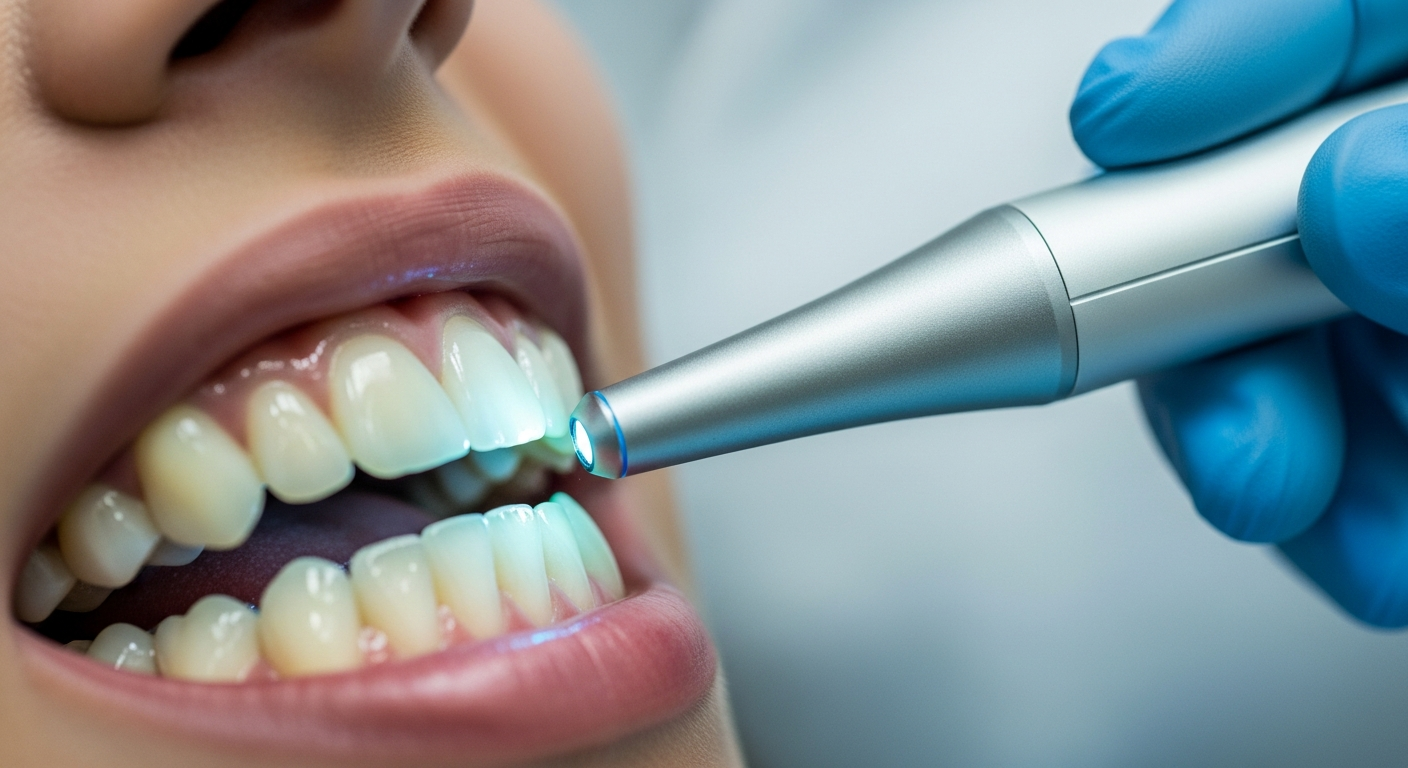
A curious thing is happening in dentistry: the most consequential “tech” in many practices isn’t a scanner, an implant surface, or an AI chart note—it’s a two-day window. A 48-hour review-response system, pitched by Dentainment as a way to turn feedback into bookings and improve Google visibility, is being treated as a growth lever on par with adding an associate. That framing should make clinicians uneasy for a moment. Not because reviews don’t matter—they do—but because it reveals where competition is moving: from clinical differentiation to trust operations.
Locklear Dentistry’s widely circulated milestone—350 perfect 5-star reviews and recognition among Greensboro’s best dentists “by patients”—looks, on its face, like wholesome local PR. In practice, it is a case study in the new unit economics of reputation. A practice with hundreds of reviews, responded to promptly and professionally, is effectively building a low-cost demand engine that most pay-per-click budgets struggle to match. In many US markets, dental Google Ads commonly clear $5 to $15 per click and far higher for implants and “emergency dentist” terms; at even a conservative 5% click-to-call and 50% call-to-appointment conversion, the acquisition cost can easily run into the hundreds of dollars per patient before any chair time is scheduled. Against that, a disciplined review workflow—staff time plus training plus judgment—can yield compounding returns: higher map-pack visibility, higher click-through, and a narrative that lowers a new patient’s perceived risk before they ever see a treatment plan.
But the non-obvious trend tying this week’s disparate stories together is that dentistry is building a parallel infrastructure whose currency is trust, and whose failure modes look more like compliance breaches than marketing misses. Consider what else sits beside those review headlines: a mental health essay on moral injury in dental hygiene; reporting that dentists may be stigmatizing certain patients; a woman arrested for scamming a dentist; a veterans’ free-care event ahead of Veterans Day; BioHorizons’ launch of a metal-free ceramic implant (Ceralog); the UK’s existential debate about NHS dentistry “running out of road”; and a financial-services press release welcoming a dental advisory firm into the MassMutual ecosystem. Different geographies, different audiences, different stakes—and yet each story hinges on the same fragile asset: credibility at the point of care.
The operationalization of trust starts innocently: answer reviews quickly, invite dissatisfied patients back, keep language “non-scripted.” Dentainment’s 48-hour system is essentially a customer success playbook imported into healthcare, with conversion as the endpoint. It can be clinically constructive when done with integrity: prompt responses can triage misunderstandings, reinforce post-op instructions, and prevent a minor service recovery issue from turning into chronic avoidance of care. Yet the moment a practice treats the review stream as a “case-start channel,” it also creates incentives that can backfire in chairside reality. Staff begin to experience reputation management as a second clinical role—one with vague boundaries, constant monitoring, and high emotional labor. That is precisely the soil in which moral injury grows: the internal friction of knowing what good care requires while being pressured—subtly or overtly—toward what keeps the rating pristine. Today’s RDH described moral injury with visceral accuracy: the shame, the throat-tightening, the professional smile while agreeing. In dentistry, it often arises not from a single unethical act, but from the drip of misalignment between values and incentives.
That misalignment is already visible in how practices talk about “difficult patients.” DrBicuspid’s reporting on stigmatization should be read not as a bedside-manner refresher, but as a warning about systematic risk. A practice optimized around five-star predictability can drift into avoiding patients who are medically complex, anxious, publicly insured, cognitively impaired, or simply less fluent in the unspoken rules of consumer healthcare. Stigma becomes an operational shortcut: fewer surprises, fewer chairside conflicts, fewer negative reviews. The cost is borne by patients—reduced access, worse oral-systemic outcomes—but also by the profession’s social license. Veterans’ free-care events, meanwhile, are often framed as altruism (and many are), yet they also function as reputational capital in a marketplace where the public is increasingly skeptical of healthcare pricing. Charity dentistry is becoming one of the last universally legible signals of goodwill. The uncomfortable truth is that it can also be used to launder brand perception if the day-to-day experience for vulnerable patients is otherwise exclusionary.
Clinical innovation is now being pulled into the same trust economy. BioHorizons’ Ceralog metal-free ceramic implant taps a real patient demand signal: “metal-free,” “biocompatible,” and aesthetic narratives travel faster than any peer-reviewed paper on osseointegration. Ceramic implants may offer benefits for select indications, but they also carry technique sensitivities and evidence gaps relative to the titanium systems most clinicians can place with predictable long-term outcomes. In a trust-driven market, vendors and practices are incentivized to communicate in patient-forward language that resonates with anxieties and identity. The risk is that informed consent gets distorted: the patient hears “metal-free” as safer by default, while the clinician is thinking about fracture risk, restorative constraints, emergence profile realities, and the limited longitudinal data in certain cohorts. This is not an argument against innovation; it is an argument for clinical communication that is built like a quality system—documented, consistent, audited—rather than improvised in response to what performs well online.
The same trust infrastructure logic explains why financial services are moving closer to dentistry. MassMutual South Carolina’s welcome of Bluewater Dental Advisors is not just a networking note; it’s a signal that advisory firms see opportunity in the profession’s complexity: DSOs expanding, fee-for-service practices trying to hold margin, associates navigating buy-ins, and owners wrestling with retirement and recapitalization. When finance enters more deeply, dentistry’s “trust stack” acquires another layer: patients must trust that recommendations are clinically justified; teams must trust compensation systems; and owners must trust that growth strategies don’t trade long-term reputation for short-term EBITDA. The presence of advisors can be beneficial—more disciplined benchmarking, better capital planning—but it also raises the premium on governance: conflict-of-interest management, transparent KPIs, and clinical autonomy safeguards.
Zoom out further and the UK’s NHS dentistry strain becomes the macro version of the same story. When a system’s capacity and reimbursement no longer map onto population need, trust erodes on every edge: patients distrust access promises; clinicians distrust the contract; policymakers distrust providers; and the public interprets the failure as either professional greed or governmental neglect. “Running out of road” is not merely a funding problem; it’s a legitimacy problem. In that context, reputation management is not cosmetic—it becomes survival. Yet even sophisticated review-response systems cannot patch structural access failures. They can only triage the symptoms at the practice level, often by shifting burden onto front desks and hygienists who already serve as the emotional shock absorbers for a stressed system.
Even the “woman arrested for scamming dentist” headline fits. Fraud is not a quirky outlier; it is a predictable externality in an ecosystem where identity verification, payment flows, and scheduling automation have expanded faster than controls. Practices that invest heavily in online conversion—frictionless booking, rapid intake, “text us” workflows—also open new attack surfaces. The clinical response is not to retreat into gatekeeping that punishes legitimate patients; it is to treat trust as something to be engineered. That means verifying identities without humiliating patients, setting payment policies that deter scams without creating barriers to care, and training teams to recognize manipulation tactics. In other words: trust operations again.
The “so what” for industry insiders is uncomfortable but actionable. Dentistry’s competitive frontier is no longer simply clinical skill plus convenient hours; it is the ability to build trust systems that are as disciplined as infection control. A 48-hour review response policy is not marketing fluff if it is integrated into a broader framework: equitable patient communication, clear informed consent documentation, a non-stigmatizing culture, fraud-aware workflows, and realistic promises about access. Practices chasing perfect review counts should ask a harder question than “How do we get more five-stars?” They should ask, “What behaviors are we incentivizing—and what are we silently excluding?” Perfect ratings can be a sign of extraordinary care, or a sign that feedback has been managed to protect a brand rather than illuminate reality.
What I would watch next is whether practices begin to quantify trust the way they quantify case acceptance: not just star averages, but response time, resolution rate of service recoveries, complaint-to-retention metrics, demographic equity in scheduling outcomes, and staff burnout indicators correlated with review volatility. If this sounds like overkill, consider the alternative: a profession that allows consumer platforms, financial intermediaries, and viral narratives to define dentistry’s legitimacy from the outside. The winners in the next cycle will not be those with the newest implant material or the most polished website; they will be those who can prove—clinically and operationally—that their growth is built on durable trust, not fragile optics.