practice
Dentistry’s New Margin Battle: Charity, Travel, and the Digital Front Door
Veterans’ pro bono full-arch cases, implant tourism, and same-day emergency expansion point to a single shift: dental value is migrating away from the operatory.
By Jennifer Park ·
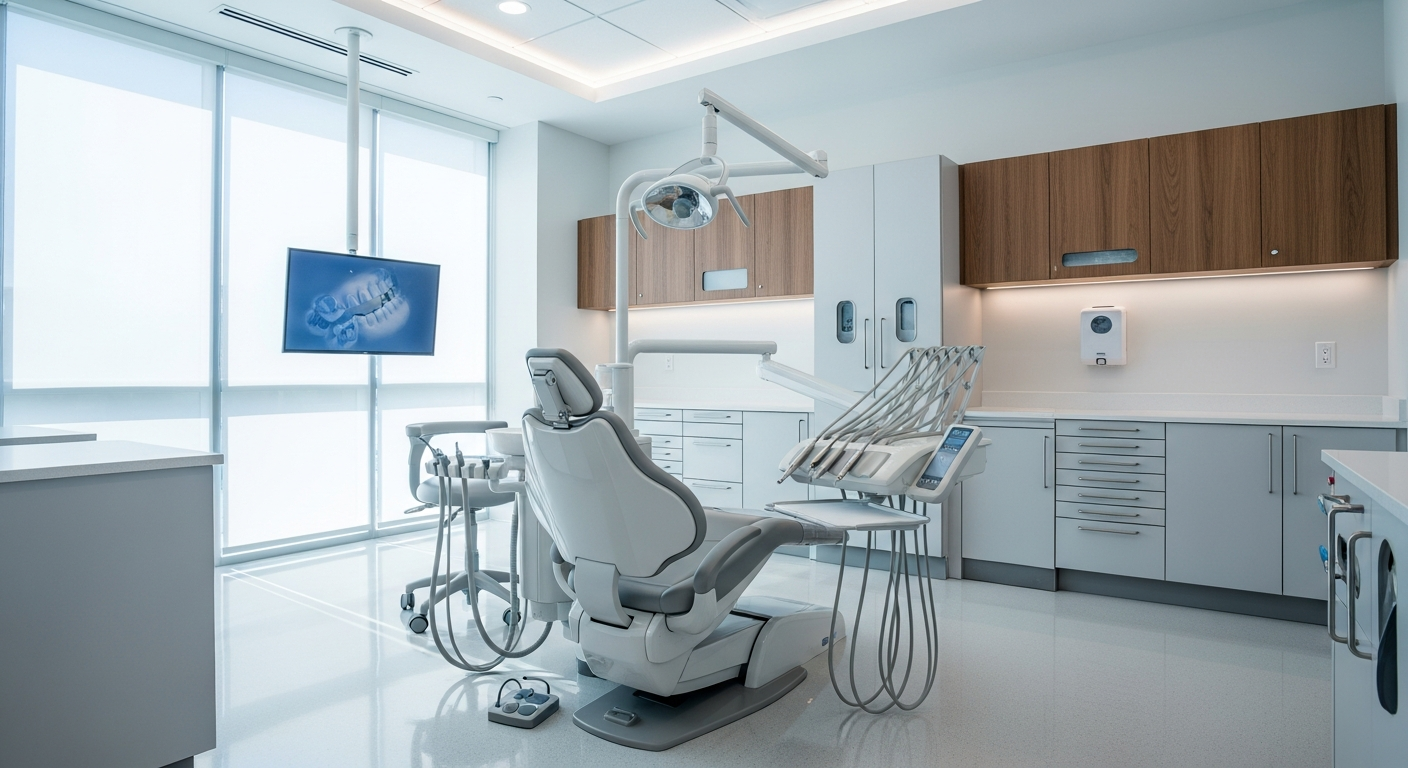
On one day each year, dentistry briefly resembles a public utility. Veterans line up early for free cleanings, fillings and extractions, and local media runs the familiar feel-good footage: gratitude, flags, volunteer clinicians. This year’s cycle included broad Veterans Day free-care messaging and a more capital-intensive version of charity—local partnerships offering no-cost full-arch restorations for Veterans, the kind of case that typically carries a five-figure fee tag in the US when implants, prosthetics, imaging and sedation are bundled. On the surface, these stories are about access and goodwill. In practice, they are also about a market signal: dentistry is becoming a contest over who owns the patient journey before and after the chair, not just during it.
That shift is easiest to see in the places we rarely look for strategy—pro bono events, emergency availability announcements, and the odd clinical “zebra.” The Veterans Day pop-up isn’t merely a clinical day; it is a high-volume operations stress test with a marketing halo. Full-arch charity is even more revealing: it requires CBCT planning, surgical-prosthetic coordination, lab capacity, and aftercare commitments that extend months beyond the photo op. Meanwhile, a private emergency dental practice in Victoria touts expanded same-day availability starting November 2026—an oddly specific long-range promise that reads less like a scheduling tweak and more like an infrastructure bet: chair time is being reallocated toward access guarantees, not just production targets. Put these together and the non-obvious trend emerges: “care” is being repackaged as a service platform with time-based commitments—same-day, one-day-only, full-arch lifecycle—while the procedure itself becomes commoditised and comparables become easier to shop.
Nothing accelerates commoditisation like a price list with a boarding pass. The implant-tourism story—Americans comparing six destinations by price, travel time and aftercare—should bother any US practice owner more than it currently does. Patients are now doing the math in public: even with flights and hotels, a two-arch implant case abroad can feel rational when domestic quotes climb into the $25,000–$50,000 range, especially for retirees on fixed income or employers with high-deductible plans. The article’s framing—explicitly weighing “aftercare”—is the tell. For years, US practices defended pricing with quality, sterility, and “you get what you pay for.” Now the consumer question is operational: who will manage complications, relines, peri-implantitis and screw loosening when the surgeon is 2,000 miles away? That aftercare gap is not just a clinical risk; it is a business opening for domestic practices willing to build structured post-travel implant maintenance programs with clear diagnostics, written protocols, and predictable pricing. Practices that ignore implant tourism will still see its downstream effects—except as unplanned chair time filled with frustrated patients and reputational landmines.
This is where Align Technology’s CEO move looks less like corporate gossip and more like a signpost. Align naming Jennifer Davis, a Procter & Gamble executive, as its new chief executive reads like consumer packaged goods logic entering a device-and-software company that already behaves like a platform. P&G executives are trained on brand architecture, lifecycle marketing, and distribution discipline—exactly the muscles required when your product (clear aligners) depends on a network of providers but is chosen by consumers who increasingly act like direct buyers. For practices, the implication isn’t “Align will advertise more.” The implication is that the front door of orthodontic demand will be engineered with the same precision as a shampoo category: segmentation, funnel conversion, subscription-like retention through retainers and monitoring, and relentless standardisation of the user experience. When manufacturers optimise the consumer journey, the independent practice either integrates into that journey on someone else’s terms or builds its own access-and-follow-up machine. Either way, the centre of gravity moves from clinical artistry to operational orchestration.
Operational orchestration also explains two stories that seem unrelated until you run a practice. One is the viral-sounding medical item about dental X-rays finding foreign objects in children’s noses, including a button battery. The other is a case report on a rare 3-2-1 root canal configuration with three mesiobuccal canals in a maxillary first molar. Both are reminders that dentistry sits at the intersection of diagnostic vigilance and workflow discipline. The button battery is not trivia; it is a time-critical emergency that can cause caustic burns and septal perforation. The rare canal anatomy is not academic; it is the difference between a profitable endo appointment and a remade crown plus an angry review because “the tooth still hurts.” The practices that perform consistently are the ones with systems: radiographic protocols, escalation pathways, and referral relationships that are frictionless. When you layer in same-day emergency availability, the bar rises further: you can’t market “urgent care” without a triage script, a same-day imaging pathway, and a financial policy that doesn’t collapse under write-offs and refunds.
Now widen the lens to the China-ASEAN “digital path” for dental cooperation. It’s tempting to treat that as geopolitics, not chairside reality. But digital dental cooperation usually means shared workflows: scan-and-design pipelines, remote treatment planning, lab coordination, and training exchanges that standardise protocols across borders. That matters in a world where Americans are already comfortable crossing borders for implants. Digital infrastructure makes clinical work more portable, labs more scalable, and treatment planning more centralised. If lab design and aligner planning can be routed internationally, then the differentiator for a local practice becomes less about “we have a great lab partner” and more about “we run a reliable care continuum.” The winners will be practices that treat the digital layer—imaging, documentation, monitoring, aftercare—as a profit centre and a risk-control mechanism, not as overhead.
Even the troubling story of a former dentist allegedly making vexatious triple-0 calls belongs in this mosaic, because it underscores how fragile trust is and how quickly dentistry can become reputationally radioactive. The modern patient arrives with Google, Reddit, Facebook groups and a camera. They also arrive with heightened sensitivity to professionalism and ethics. One scandal, one volatile former clinician, one viral thread about “dentists upselling implants,” and suddenly your practice’s most valuable asset—credibility—erodes. That is why community-facing service days for Veterans and school-based programs like Smiles Across Montana carry strategic weight beyond altruism: they are trust infrastructure. School-based initiatives build early familiarity with preventive care and reduce the anxiety that drives emergency-only utilisation later. Veterans events create goodwill with a cohort that often has complex medical histories and fragmented coverage. Trust, however, must be operationalised. If a practice uses a Veterans Day event as a marketing moment but can’t offer follow-up appointments, specialty referrals, or transparent pricing afterwards, it is converting goodwill into disappointment.
The unglamorous truth is that dentistry’s next margin battle will be fought in scheduling templates, handoff scripts, and aftercare agreements. Full-arch charity cases are not just donations; they are demonstrations of a coordinated care model that most practices struggle to deliver profitably at retail pricing. Implant tourism is not just competition; it is the market telling you that price transparency and predictable outcomes matter as much as brand reputation. A P&G-trained CEO at a category-defining company is not just a leadership change; it is a signal that consumer-experience playbooks are coming for clinical categories. And the diagnostic edge cases—the button battery, the three-mesiobuccal-canal molar—are reminders that outcomes hinge on process, not heroics.
For practice owners and DSOs, the “so what” is clear and uncomfortable: stop defining your business as procedures and start defining it as a managed pathway. That means building three capabilities with the same seriousness you give to production goals. First, access engineering: same-day slots with real triage, not calendar chaos; clear criteria for emergencies; and a pricing model that protects margin while preserving trust. Second, aftercare monetisation: structured implant maintenance and complication-management programs that capture the inevitable downstream demand from both domestic and overseas surgeries, with explicit boundaries and documentation. Third, digital continuity: imaging standards, remote check-in workflows, and lab/planning relationships that make your outcomes reproducible, even when staffing is tight.
The practices that thrive in this next phase will look less like boutique operatories and more like disciplined service businesses: they will know their response times, their remake rates, their no-show probabilities, and their case acceptance drivers by channel. They will do charity with a follow-up plan, welcome the post-tourism patient with a protocol, and compete with consumer brands by delivering something brands can’t easily replicate—local accountability over time. Dentistry is not becoming less clinical; it is becoming more operational. And the operators who accept that will find that the most durable competitive advantage is not the newest scanner or the flashiest implant system, but the ability to own the patient journey when everyone else is trying to unbundle it.