dental-marketing
The 12-Clip Video Sprint That Turns Browsers Into Consults
Most dental videos fail because they’re “nice” but not built to convert. This playbook shows how to produce a tight set of practice-tour, patient-story, and short-form clips in one sprint, then deploy them across Instagram, TikTok, YouTube, and Google to drive consult requests within 30 days.
By Dentainment ·
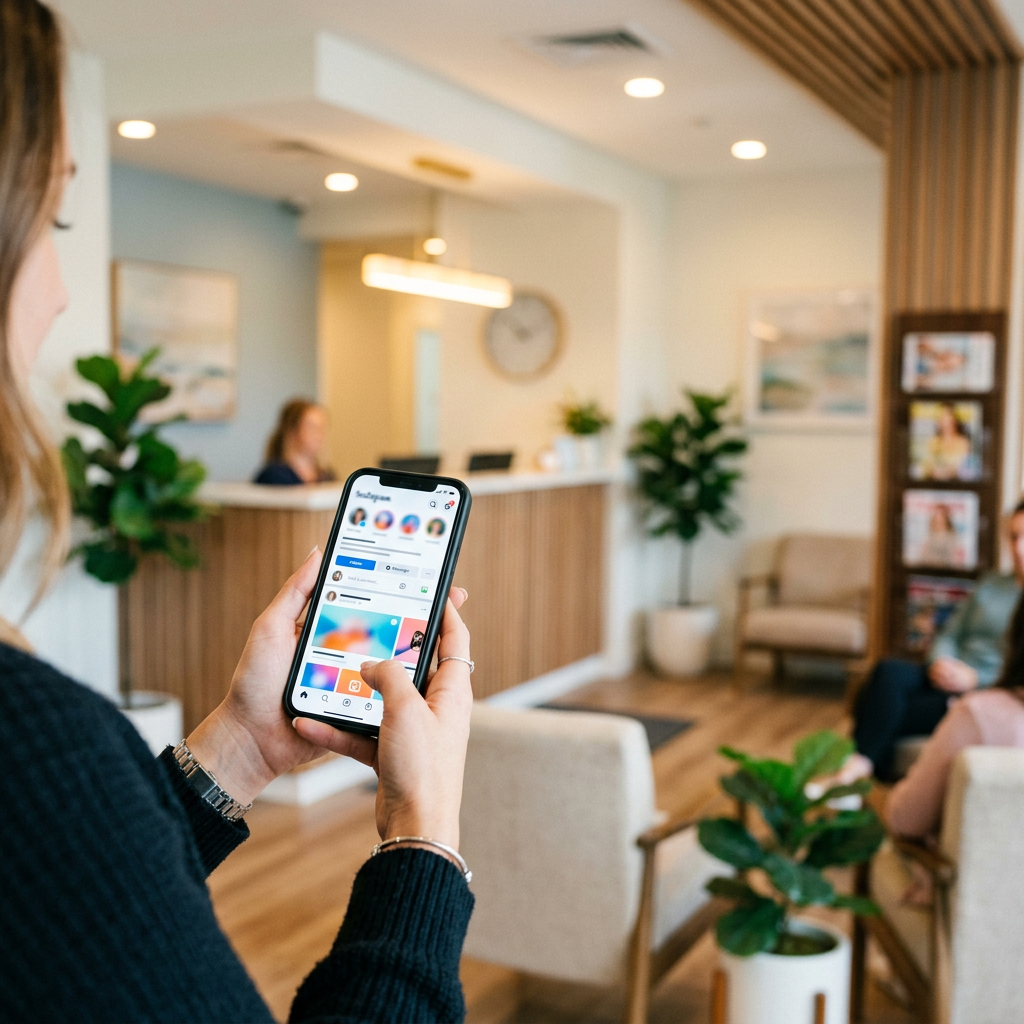
At Dentainment, we see the same pattern in dental video over and over: the practice spends money on a beautiful two-minute brand film, posts it twice, and calls video marketing “done.” Meanwhile, the videos that actually move schedules are usually 12–25 seconds long, have one job (answer a specific objection or reduce uncertainty), and show real humans in the practice. If you want video to produce consults—not just likes—you need a small library of clips designed for decision-making moments.
Here’s the play that works reliably for general and specialty offices: a 12-clip “Video Sprint” produced in one half-day, then distributed for 30 days with simple rules. The goal is to cover the three conversion questions every prospective patient has: “Can I trust you?”, “Will this be comfortable?”, and “How do I start?” If your videos answer those in multiple formats, your DMs, calls, and form fills become measurably easier to win.
Start with the sprint structure. Plan for a 3.5–5 hour shoot block, one staff member assigned as wrangler, and one clinician for on-camera moments (not all doctors need to speak). A lean budget range is $1,500–$3,500 if you hire a local videographer/editor to capture and cut short-form; a more polished sprint with lighting, two cameras, and an editor who understands vertical-first can run $4,500–$8,000. If you’re DIYing with an iPhone 14+ and a $120 wireless mic, budget $200–$500 for a small light and tripod and spend the money on editing time instead.
The 12 clips are not random. You want four practice-tour clips, four patient-story clips, and four objection-killer “micro explainers.” Each is filmed vertical first (9:16), framed chest-up or waist-up, with natural clinic sound and captions burned in. For benchmarks, we typically aim for 12–18 seconds average length, first two seconds must show a face and an outcome, and captions should be readable without sound. A good short-form completion rate target is 35–50% on Instagram Reels and TikTok; if you’re consistently under 25%, your hooks are too slow or your clips are too long.
Practice tours should not be generic walk-throughs. Prospects don’t care about your hallway; they care about what they’re nervous about. Record four “anxiety reducers” as micro tours: your sterilization flow in one sentence while showing the room; your comfort menu in one sentence while showing headphones/blankets/nitrous setup; your technology proof in one sentence while showing scanner/CBCT; and your “what happens when you arrive” clip that shows check-in and a friendly handoff. Each clip should end with a simple next step: “If you want to see what this feels like, book an exam online or call us.”
Patient stories work best when they’re not testimonial theater. You’re not trying to win an award; you’re trying to reduce perceived risk. Capture two kinds: a “decision story” and an “outcome story.” The decision story answers what made them choose you (fear, bad past experience, time, financing, convenience). The outcome story answers how life changed (smiling, chewing, pain relief, confidence). Keep these to 20–35 seconds; longer is fine for YouTube, but short-form should stay tight. If a patient won’t be on camera, use “hands + voice” while they talk over b-roll of them checking in or being greeted, or record audio and pair it with before/after images where permitted. Always use written consent; make it easy by having a one-page media release at check-in.
Now the micro explainers: these are the highest ROI clips when you choose the right topics. Pull them from your front desk’s daily friction. Four that perform consistently are “Do you take my insurance?” (answer: we’re in-network with X, we’ll estimate benefits, your treatment choice comes first), “How much does it cost?” (answer with ranges and what affects cost, plus mention financing), “I’m nervous about pain” (answer with your approach, numbness checks, sedation options), and “How fast can I get in?” (answer with your actual availability and what’s considered urgent). Each should be 12–20 seconds and filmed as if you’re speaking to one person on the phone.
Distribution is where most practices waste the sprint. Don’t “post and pray.” Use a 30-day deployment with a simple cadence: 3–5 short-form posts per week across Instagram Reels, TikTok, and YouTube Shorts, and one longer compilation (60–120 seconds) every two weeks on YouTube. If you can only do one platform, pick Instagram for local dental in most markets; if you have a younger demographic or ortho-heavy mix, TikTok is often worth the additional effort; YouTube Shorts helps more than people think because it feeds discovery and can support branded search.
Tie the sprint to your conversion points. First, upload the best practice-tour clip to your Google Business Profile as a video post and as a media asset; it increases trust at the exact moment people are choosing between map results. Use the official Google listing tools via Google Business Profile. Second, pin one “how to start” video to the top of Instagram and TikTok. Third, embed a 45–75 second “new patient experience” compilation above the fold on your new patient page. Expect that a strong embedded video can improve new patient form conversion by 10–25% relative (for example, 4.0% to 4.6–5.0%), especially when it answers insurance and comfort questions.
Paid amplification is the multiplier, but only if you aim it correctly. Do not run “video views” campaigns and expect calls. Instead, run a small retargeting budget to people who watched 50%+ of your clips or visited key pages. A practical starting point is $300–$800/month on Meta for retargeting within 5–8 miles (or your realistic draw radius), optimizing for leads or landing page views depending on your tracking maturity. Your benchmark isn’t CPM; it’s cost per qualified inquiry. In many markets, a healthy range is $25–$80 per qualified lead for general dentistry and $60–$150 for high-value specialties, but only if your landing page and follow-up process are competent.
You also need a measurement loop that doesn’t lie. Track three numbers for 30 days after the sprint: how many website visits hit your booking page, how many form fills or calls you received, and how many actually scheduled. If you’re using a scheduling tool, make sure the source is captured; if not, at minimum use unique tracking numbers for Meta and Google. On the content side, your “winner” clips are the ones that generate profile visits and taps to call/website, not the ones that generate comments from existing patients.
The last piece is operational: make your team part of the sprint, not an audience. Give your front desk two scripts tied to your videos. One: when someone asks about comfort, send the comfort tour clip by text. Two: when someone hesitates on insurance, send the insurance explainer clip. If you’re using a texting platform, load these as templates. This is where video stops being “marketing” and starts being a sales tool.
If you run this sprint once, you get a month of solid content. If you run it quarterly, you build a library that compounds. Most importantly, you stop trying to impress everyone and start answering the exact questions that keep a prospective patient from booking. That’s the difference between a practice with videos and a practice that uses video to produce consults.
About Dentainment
Dentainment is a performance marketing agency built exclusively for dentistry. From AI-powered patient acquisition and local SEO to brand strategy, video, and reputation management, Dentainment helps modern dental practices and DSOs attract more of the right patients and grow predictably. Learn more or book a strategy call at dentainment.com.